
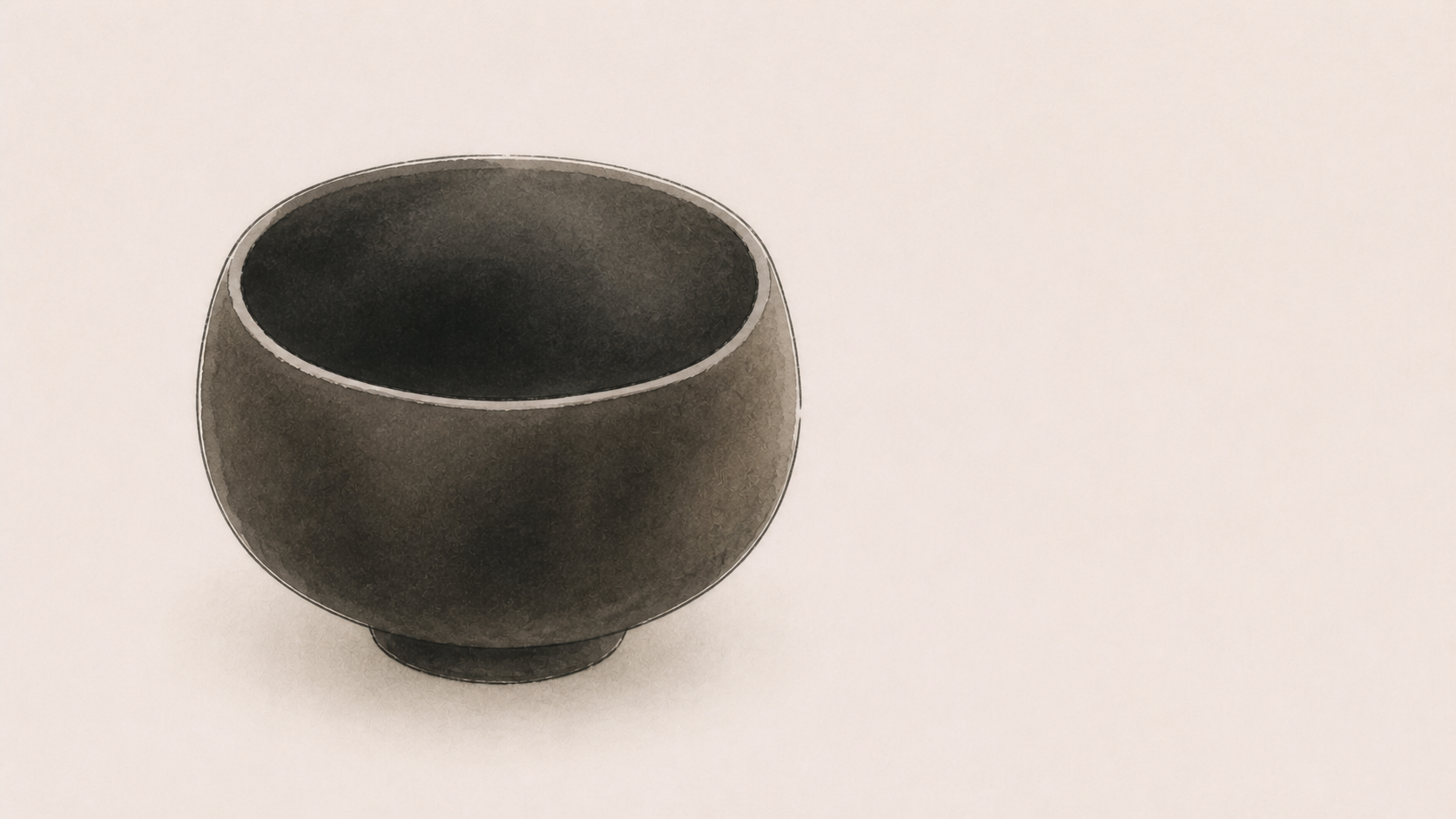
Chōjirō’s name has been handed down with his red and black Raku bowls for more than four centuries. It is the bowls themselves that have kept it alive. In the splendor of the Momoyama period, his black Raku bowls in particular offered a new form with very little decoration.
From a ceramic lion to tea bowls
How did a black bowl become a symbol of quiet beauty? What was Chōjirō trying to make, and what did black bring to the tea room? The forms of the works and the light on them offer a place to look.
The Lion with Two-Color Glazes is one of Chōjirō’s surviving works that can be dated. Made in 1574, it is a ceramic sculpture with green and transparent glazes, quite different in appearance from a restrained black Raku bowl.
The Raku Museum traces the technical roots of Raku ware to Ming-dynasty Chinese three-color glazes. A related tradition of glazes and firing lies behind the move from colorful sculpture to bowls made mostly in black and red. What was being made and what it was for had changed, along with the forms and colors that suited it.
The Raku Museum dates the beginnings of Raku bowls to around 1579, the seventh year of Tenshō. Chōjirō’s work is thought to have become closely connected to Sen no Rikyū’s tea around that time.
Rikyū’s ideas and Chōjirō’s hands
A familiar account has Rikyū ask Chōjirō to make the bowls. The Raku Museum describes Chōjirō as making red and black bowls under Rikyū’s guidance, and Kyoto National Museum’s exhibition materials present Mukiguri as a black Raku bowl born of Rikyū’s inventiveness.
To see what was creative in these bowls, it helps to consider how the two worked together beyond their roles as the person ordering the bowl and the person making it.
Rikyū’s conception of tea encountered Chōjirō’s knowledge of clay, glaze, and fire. Raku bowls emerged from that exchange. Chōjirō gave form to the bowl and had a part in shaping a new experience of tea.
A design perspective: Leaving the workmanship quietly visible
The Raku Museum describes Chōjirō’s bowls as restraining decoration, movement in the form, and individual expression to achieve depth and weight.
Japan’s cultural heritage database records black Raku bowls by Chōjirō made by hand and trimmed with a tool. The features of the rim, body, lower body, and foot settle into a single vessel that fits the person holding it. Their irregularity is part of that form.
Chōjirō’s work is memorable for the way it holds back individual expression. Where a modern designer might distinguish an object with a logo or a striking shape, these bowls leave the hand, the lips, and the tea with a few essential forms. Their presence comes from restraint.
What we know about the materials of black Raku
The Raku family’s techniques have changed from one generation to the next, and black Raku cannot be explained by one recipe. Those techniques also differ from methods now known more generally as modern raku.
The cultural heritage database describes Daikoku as a hand-shaped bowl of sandy red clay with low-fired black Raku glaze inside and out. Its entry for Shunkan describes Chōjirō’s bowls as hand-shaped and fired in an inner kiln.
The Raku Museum explains that black Raku uses a black glaze, while red Raku brings out the red of Juraku clay. It also describes a move from three-color glaze techniques to an emphasis on black and red.
Black and red Raku treat clay and glaze differently. The handling of both has changed since Chōjirō. The sheen and thickness of the glaze and the marks left by firing vary from bowl to bowl, even among works called black Raku.
Chōjirō left little in his own words.
The many shades of black
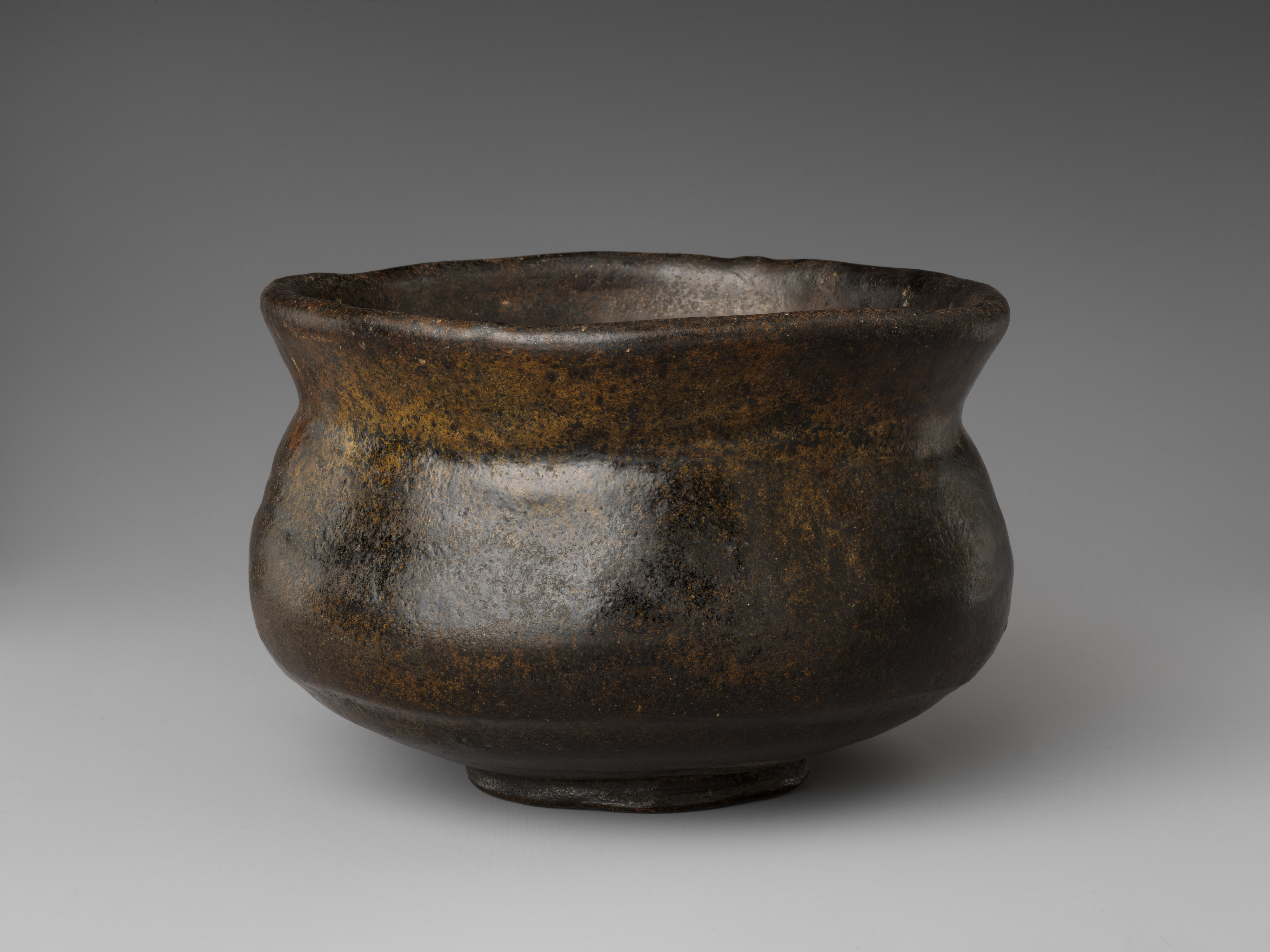
A black Raku bowl can appear uniformly black in a photograph. The records for individual works describe a range of surfaces.
Daikoku has glossy areas and dark gray-brown areas that lost their luster during firing. The black glaze on Mukiguri has a brown cast, and traces of tea remain inside. The Metropolitan Museum of Art dates its bowl Kaedegure to the seventeenth century and describes it as in the style of Chōjirō. Its outer sheen contrasts with the wear inside from extended use.
Glaze thickness, firing, use, and the angle of light can reveal sheen, cloudiness, a brown cast, and worn patches. Part of looking at black Raku is noticing the differences within the black.
The green of matcha and the light of the tea room
Once the tea has been prepared, the green of the matcha appears within the black interior. The contrast draws the eye to the froth, steam, and amount of tea. In a dim room a bowl that first appears as a black mass may show its rim and the luster of its glaze as it tilts.
Move a little to one side if you have a chance to see black Raku on display or at a gathering. Look at the bright patches and the dark places, inside and out, empty and with tea. Those differences give a particular bowl its black.
Looking at red Raku alongside black
Black and red Raku were both made in Chōjirō’s time. The Raku Museum explains that red Raku brings out the color of Juraku clay, but there are many kinds of red. The clay color, whitish areas, scorch marks, and glaze vary from one work to the next.
Looking at the clay, glaze, form, and light of an individual bowl brings us closer to Chōjirō’s work than treating black as spiritual and red as everyday. The red gives another view of what clay and fire can do.
Look for how much of the body color shows through the glaze and where firing marks and pale patches appear. Black glaze takes light on the surface, while in red Raku the clay body and changes during firing can come more visibly to the fore.
The red and black bowls both start from a hand-shaped form. Clay and glaze give them different ways of taking light. Set two bowls side by side and you may first notice the quiet of their rims and the way their bodies are held together, before the differences in color take effect.
Conclusion: Seeing light in the black
The black catches the eye and directs it toward the differences within it: the hand-shaped form, the sheen of the glaze, and the wear left by use. The light of the room and the green of the tea add another layer.
At first you may see little on the surface. The longer you look, the more there is to notice. Chōjirō’s black can be read as a way of bringing small changes in form and light into view.
Distinguish the sheen, the browns, the wear, and the light on the rim. Once those variations become familiar, a red Raku bowl, too, comes into view as the particular work of clay and fire.
In a gallery, a small move away from the frontal view makes it easier to follow the uneven rim and the light on the glaze.
References
- Raku Museum, “Birth of Raku Ware”
- Raku Museum, “Roots of Raku Ware”
- Raku Museum, “Raku Successive Generations”
- Raku Museum, “Chōjirō, the Founder: Collection”
- Cultural Heritage Online, Search Results for Chōjirō
- Cultural Heritage Online, “Black Raku Tea Bowl, Shunkan”
- The Metropolitan Museum of Art, “Black Raku Tea Bowl, Named ‘Kaedegure’ (Twilight by the Maples)”
 Why Raku Tea Bowls Leave Room for the Hand
 What to Look for in a Raku Tea Bowl: Rims, Feet, and Bowls Associated with Chōjirō
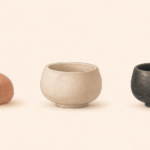 Why Raku Tea Bowls Are Shaped by Hand: First Raku, Second Hagi, Third Karatsu
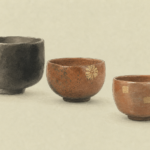 How Raku Continues by Changing: A Tradition with Room for Different Forms