
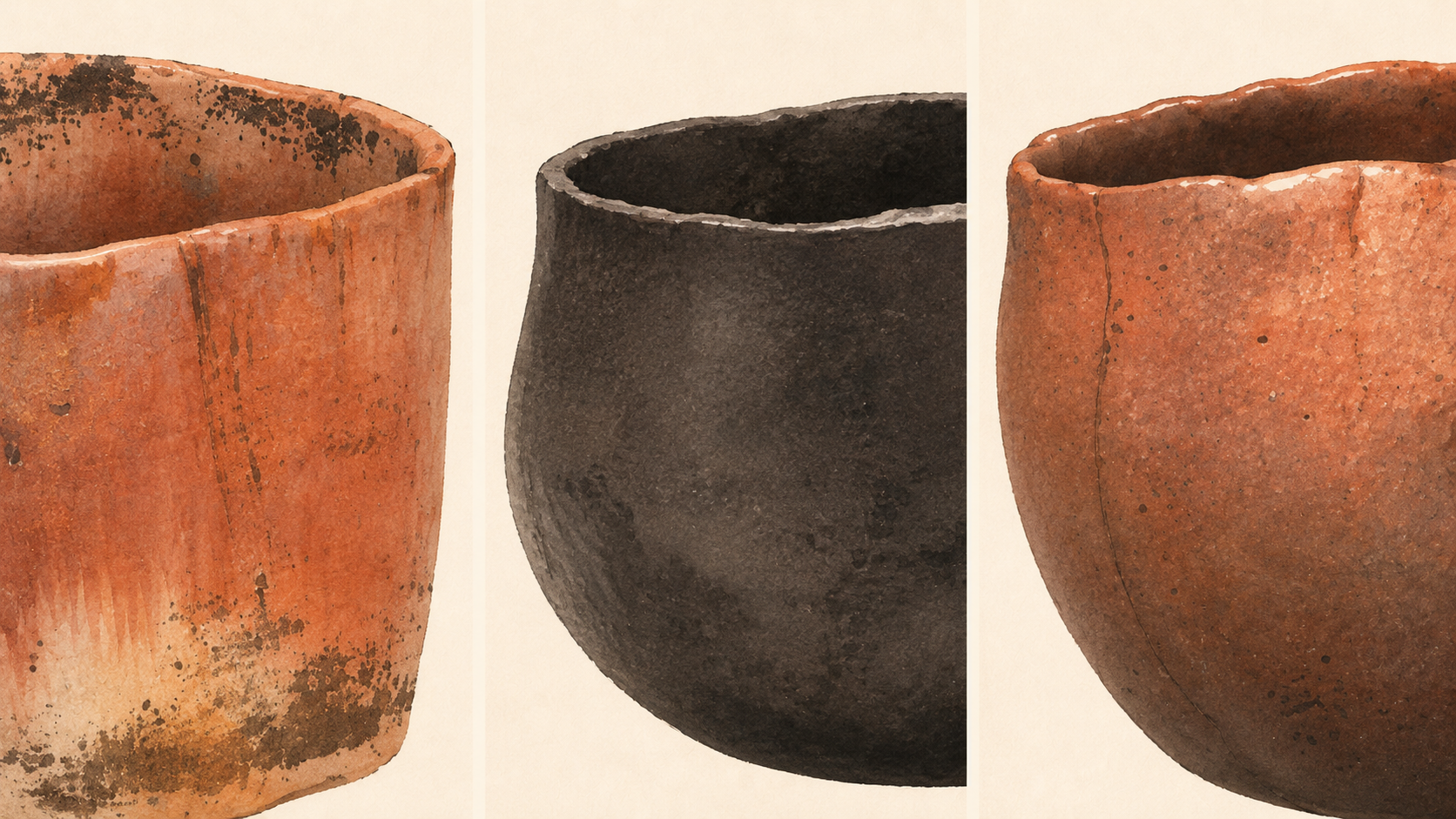
Hon’ami Kōetsu’s Raku bowls follow no single model. Fujisan is cylindrical, Otogoze full-bodied, Kaga marked by forceful trimming, and Jukushi low and rounded. How could Kōetsu give such different forms to bowls made using the Raku family’s skills? The forms show where he departed from the example Chōjirō had set.
An outsider works with the Raku kiln
Hon’ami Kōetsu came to bowl making from outside the Raku family, whose successive heads took the name Raku Kichizaemon. The Hon’ami family appraised and polished swords. Kōetsu also worked in calligraphy, lacquer, and publishing. His starting point differed from that of a professional potter trained at a kiln.
He did not source the clay, prepare the glaze, and fire the kiln alone. The Raku Museum explains that he began making bowls with help from Jōkei II and Dōnyū III around 1615, when he moved to Takagamine. The Raku family retains a letter in which he asks Kichizaemon for white and red clay. The glazes and other evidence suggest that almost all his black Raku bowls were fired in the Raku family kiln.
An account that names a single maker can obscure this division of work. Kōetsu developed the form and raised it by hand. The workshop of Jōkei and Dōnyū brought knowledge of clay, glaze, and firing. The bowls bear Kōetsu’s name and have their foundation in the family’s technique.
Kōetsu used the clay and kiln available to him and changed the outline, rim, and foot from bowl to bowl. He could explore what Raku hand shaping allowed from a position outside the family.
The makers shared a way to produce the bowl. Kōetsu retained the freedom to decide what a finished piece should look like. That distance within the collaboration made room for his forms.
Which conventions of Raku did Kōetsu depart from?
The “conventions” here are features that become apparent when we compare celebrated works by Chōjirō, rather than written rules. The Raku Museum explains that Chōjirō held back decoration, movement in the form, and displays of individuality to give the bowls weight and depth.
Chōjirō’s red Raku bowl Muichimotsu is a short cylinder with a rim that curves inward and a low foot. The red glaze has a subdued sheen, and the outline makes few emphatic gestures. The bowl and the color of tea take attention in the hands. Chōjirō brought out the presence of the vessel through restraint.
Kōetsu made the rim rise and fall like a mountain path and turn inward on one side and outward on another. He made the body oval, worked a ridge into the lower part, and left strong traces of the trimming tool. A foot could look like a small disc or sink into the body. The changes in form and the choices behind them became visible from the front.
The Raku family was changing in the same period. Jōkei II introduced shoe-shaped variations unseen in Chōjirō’s work and devised a white glaze. Dōnyū III combined glazes to extend the range of decoration and individual expression. The workshop with which Kōetsu worked was already exploring new forms.
Kōetsu knew Chōjirō’s point of departure and worked alongside makers who were themselves changing it. He carried over Raku techniques without the task of continuing the family style from one generation to the next. His position gave each bowl room for a different answer.
Fujisan, Amagumo, and Shigure: Moving the form in black and white
Fujisan, white Raku tea bowl
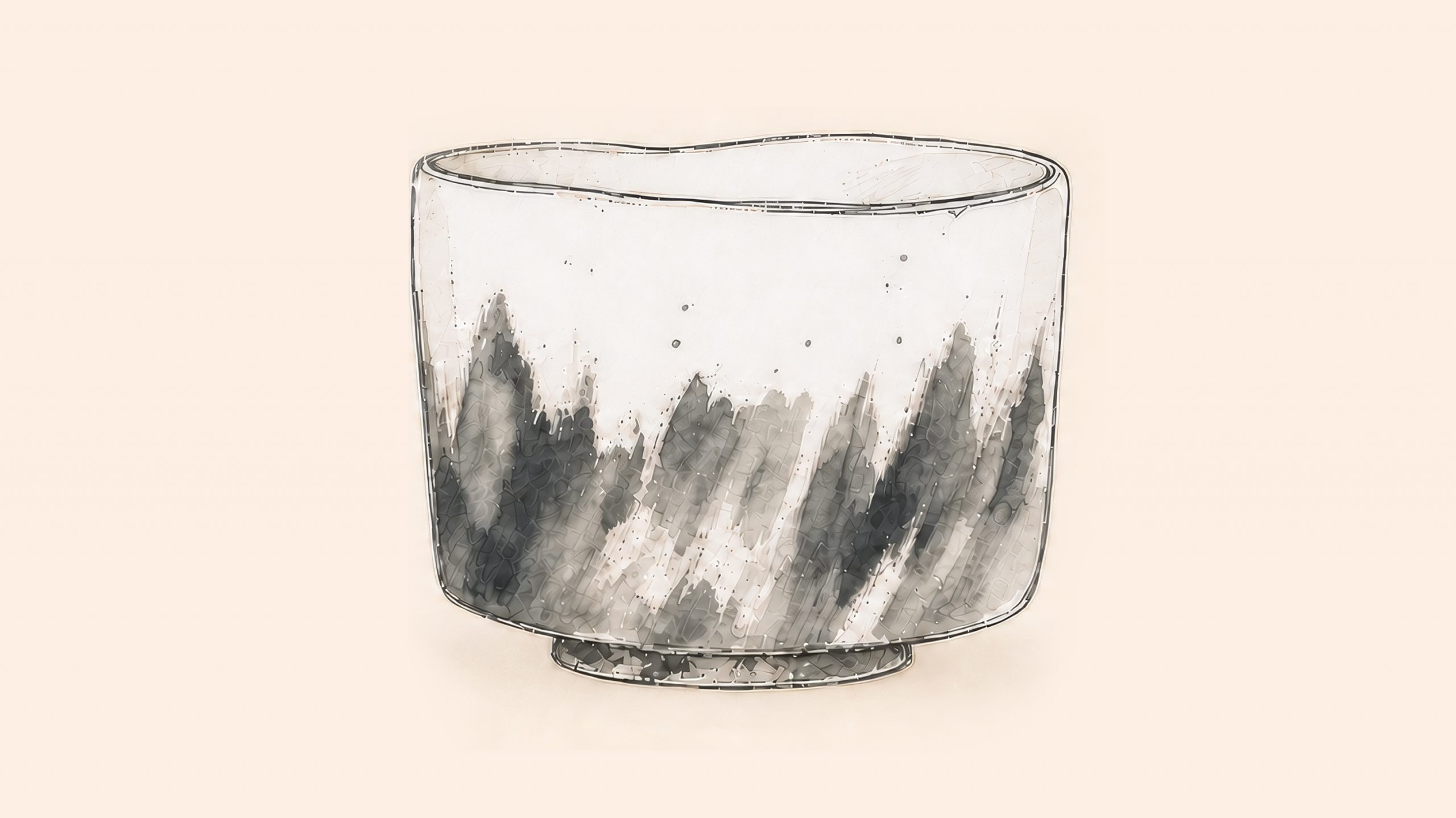
Fujisan, a National Treasure, is a steep-sided cylinder of white clay containing coarse sand and covered in thick white glaze. The thick rim was trimmed flat to leave a profile like a rising and falling mountain path. The foot is low and broad. Carbonization in the firing darkened the lower half of the body, leaving broad areas of white and dark gray.
The form is simple but has a different presence from Chōjirō’s bowls. The boundary between the upper and lower colors gives the front force, and the rise and fall of the thick rim moves the eye sideways. Broad fields of color and a pronounced outline give the bowl a composition of its own.
Amagumo, black Raku tea bowl
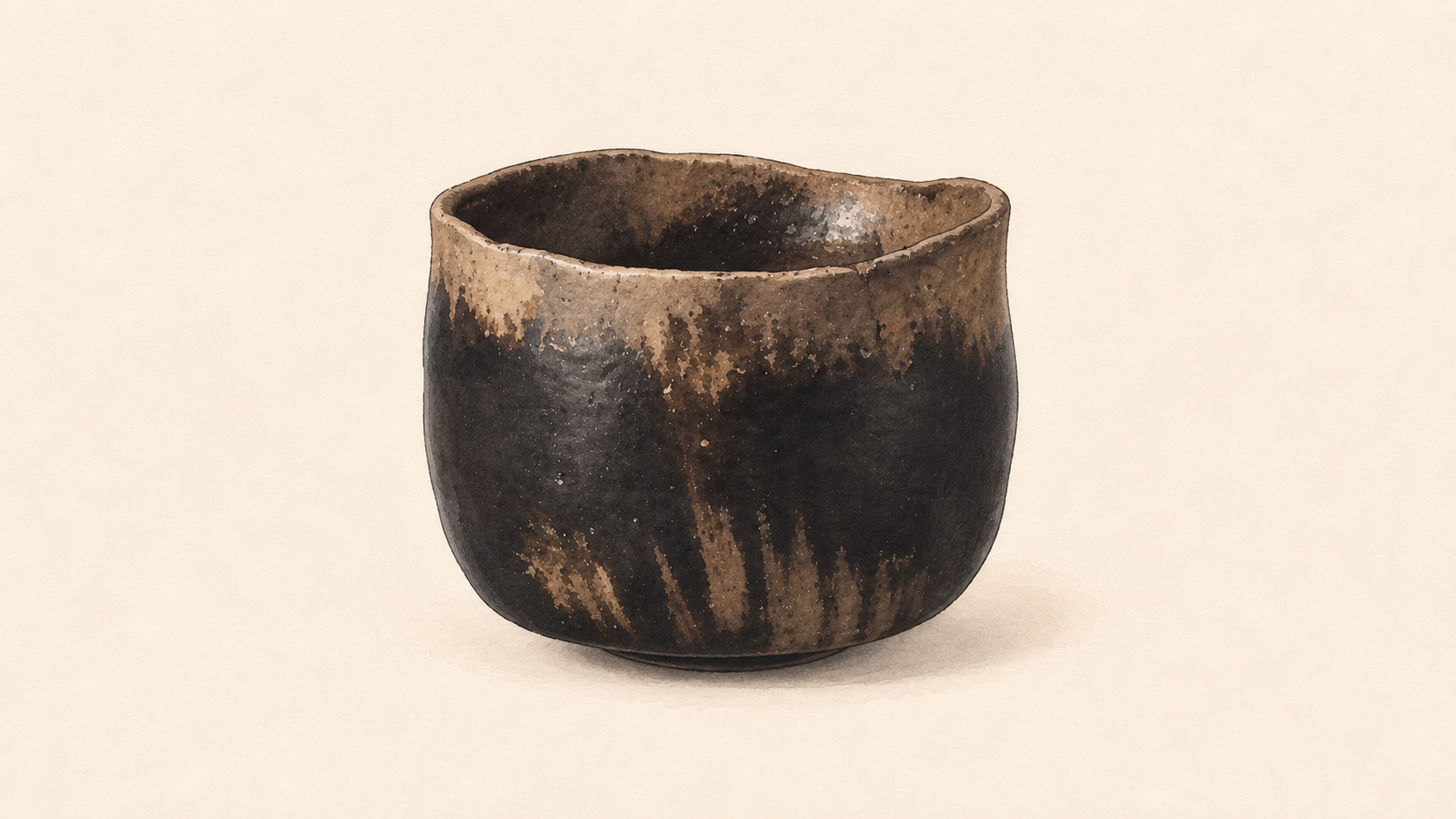
Amagumo, an Important Cultural Property, has a slightly flared rim, steep sides, a rounded lower section, and a small, low foot. A dark amber-black glaze coats the inside and outside, with a patch of black-brown clay left exposed. That patch alters the weight of the surface within the black, without a cloud having to be painted on it.
Shigure, black Raku tea bowl
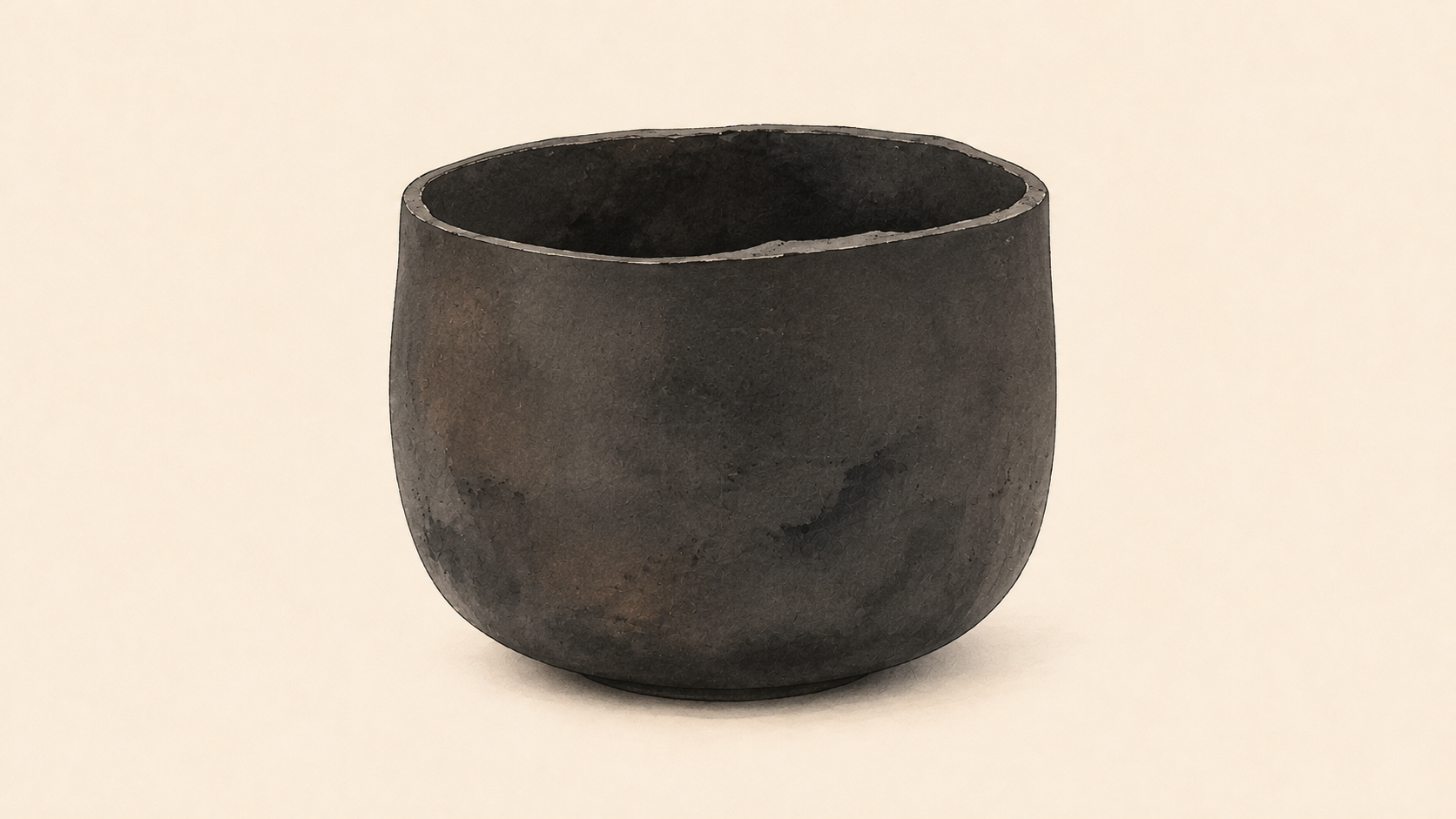
Shigure is also black Raku. It is half-cylindrical with a generous lower curve, swelling a little toward the base and drawing in near the mouth. The walls are relatively thin, and the top of the rim was trimmed flat. The black glaze melted to a sheen, and thinner passages reveal the dark brown clay.
Fujisan has upright sides and two broad fields of color. Amagumo has a light-looking outline on a small foot. Shigure has thin walls and a rounded base. The black and white categories tell only part of what each bowl does with volume, rim, and glaze.
Murakumo has an outward-flaring mouth and reddish-brown clay exposed where glaze was left off. Rippō was pressed into an oval, with one side of the rim turned inward and the other turned out. Color, the direction of the rim, and the extent of visible clay all take part in the form.
Otogoze, Kaga, and Jukushi: Letting the maker’s choices show in red Raku
Otogoze, red Raku tea bowl
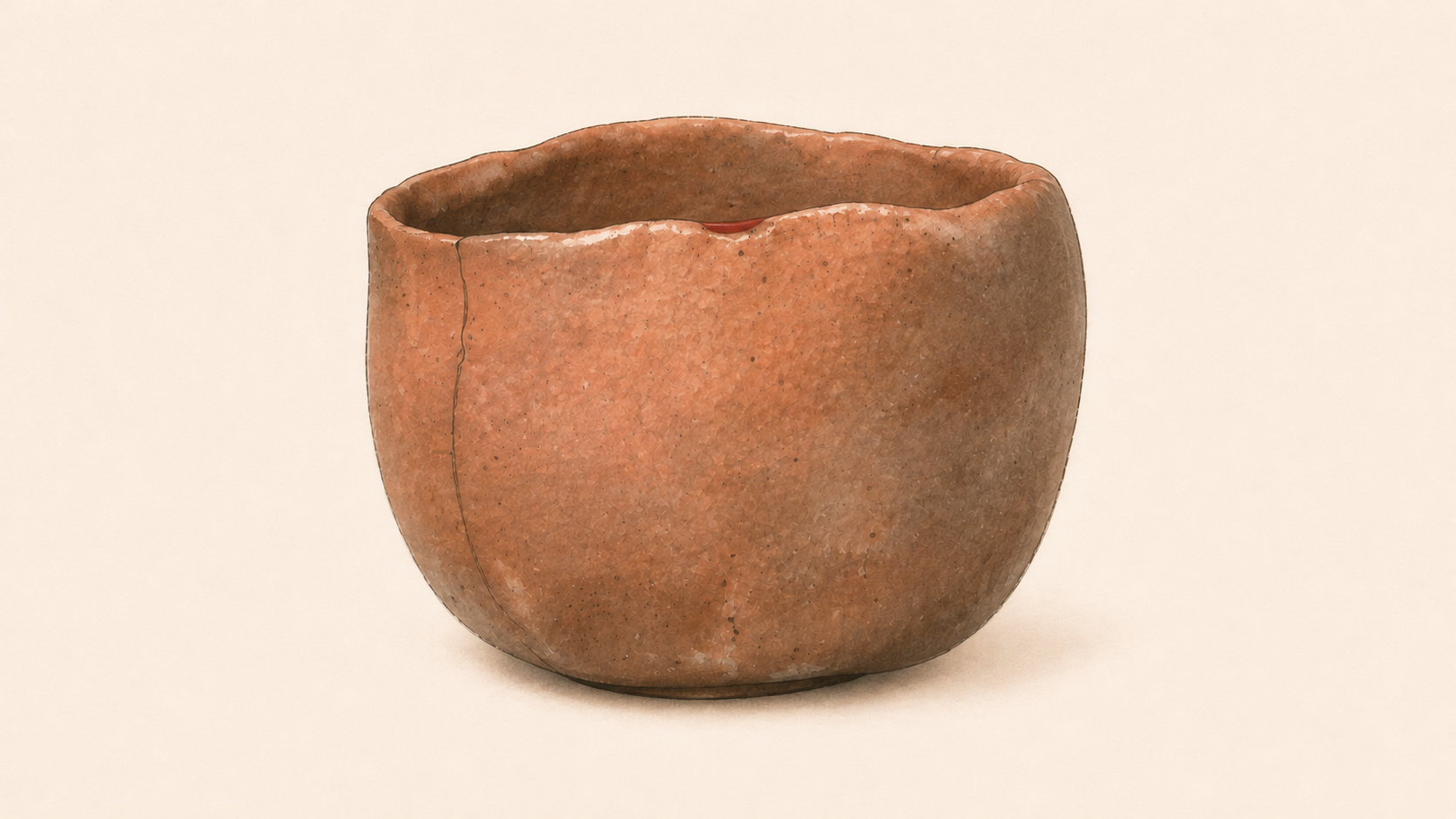
Otogoze, an Important Cultural Property, rounds from the lower body to the foot in an oval. The rim rises and falls like a mountain path and turns in almost all the way around, with a slight outward flare on one side. The foot is extremely low, like a small disc. Otogoze refers to Otafuku, a figure with full cheeks.
Where Chōjirō restrained the movement of the outline, Otogoze gives prominence to the swell of the body. Part of the rim curves in and part turns out. Turn the bowl and it gives you a different profile each time.
Kaga, red Raku tea bowl, also known as Kaga Kōetsu
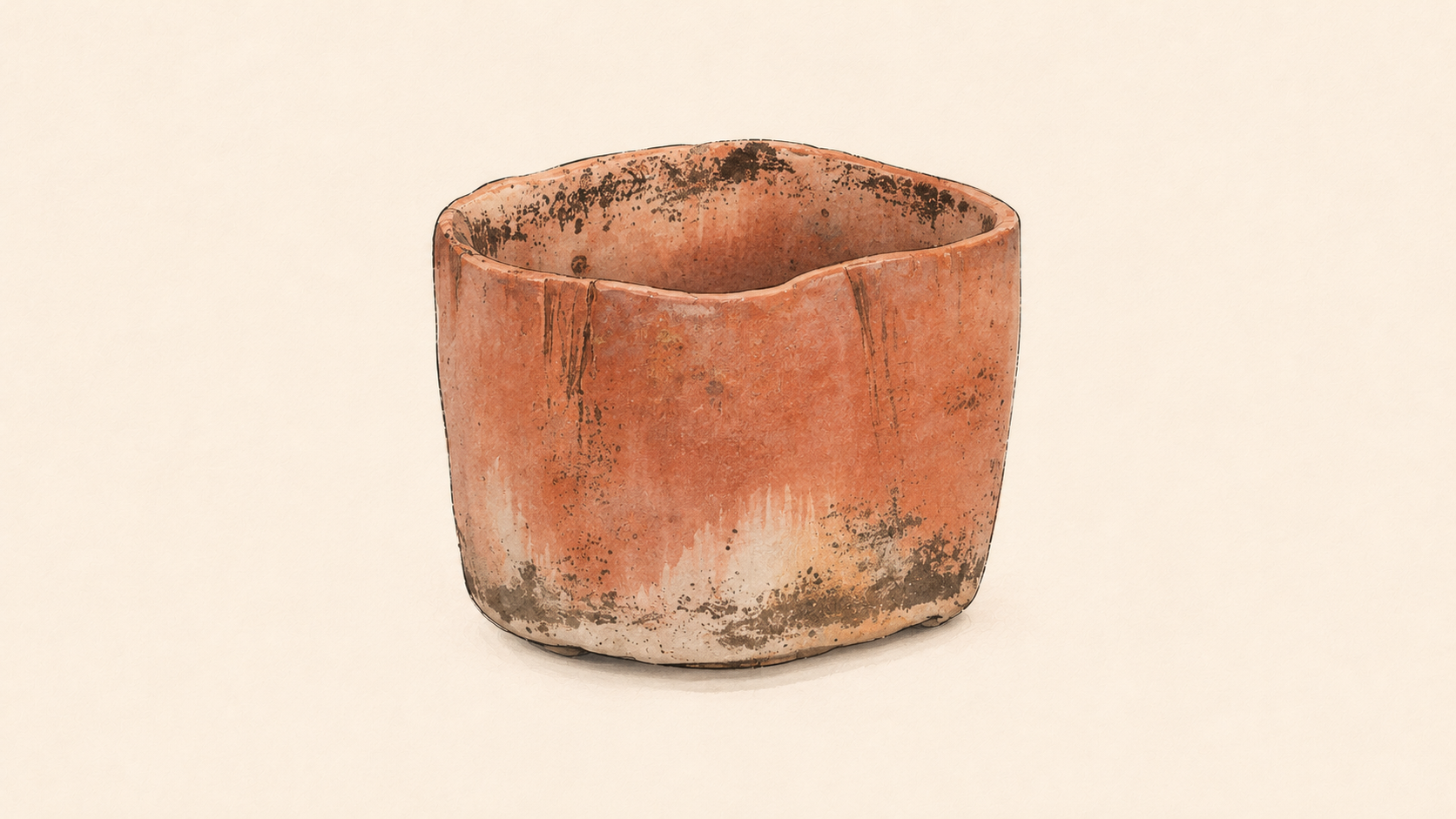
Kaga, an Important Cultural Property, is a large half-cylindrical bowl whose mouth measures 11.8 to 12.7 cm across depending on the direction. The body swells, narrows at the base, and meets the lower section in a distinct ridge. Flat cuts and rounded rises alternate along the rim, and the walls vary in thickness. Two strong cuts run from the rim toward the middle of one face.
The ridge, slope, cut marks, and changes in thickness leave the shaping openly visible. The pale clay slip, yellow earth, and clear glaze show pale red brush marks and green spots from firing. The name refers to the tradition that it belonged to Sensō Sōshitsu, who served the Maeda family of Kaga.
Jukushi, red Raku tea bowl
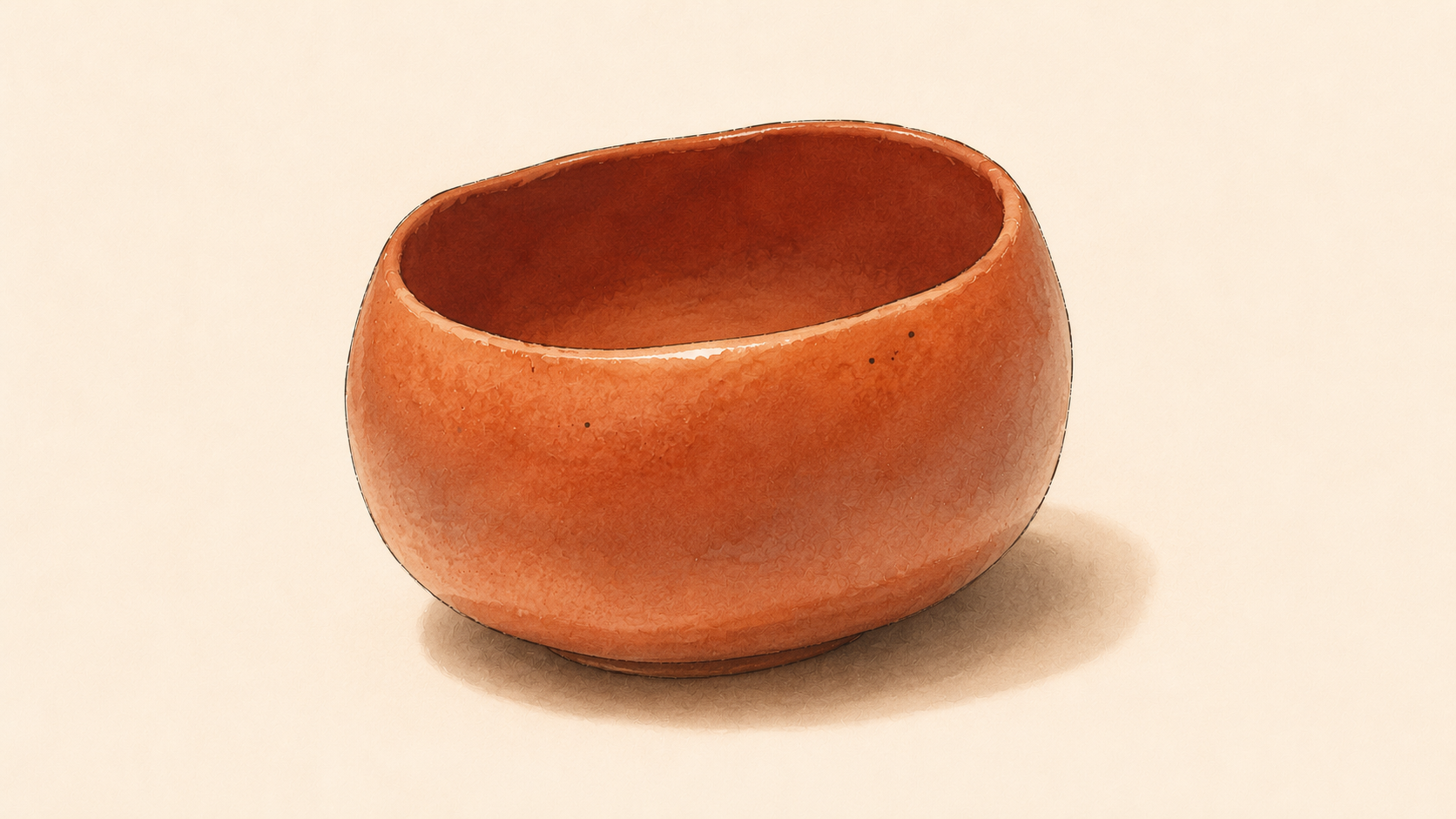
Jukushi is low with a full, round body. The foot sits low, as if it had sunk into the body, and the weight seems to settle like that of a ripe persimmon. It shares Otogoze’s fullness, but its low height makes it spread laterally and look more firmly set down.
Bun’oku leans as it swells and has an irregular rim and nearly submerged foot. Rippō has an amber glaze and an oval outline. Benzaiten is a cylindrical red Raku bowl. The more of them we see, the more significant their refusal to share one outline becomes.
What makes a bowl look like Kōetsu’s?
First, the rim changes treatment as it goes around the bowl. Otogoze and Rippō turn inward in some places and flare outward in others. Kaga alternates flat tool cuts with rounded rises and dips. The rim both meets the lips and guides the changes in profile as the bowl turns.
Second, the bodies have different volumes. There is Fujisan’s upright cylinder, Otogoze’s full oval, Jukushi’s low sphere, and Kaga’s large, ridged half-cylinder. Each has a body of its own.
Third, the foot sets the character of the whole bowl. Fujisan has a broad, low foot, Otogoze a small disc, and Jukushi a foot that seems to disappear into the body. Even with the same mouth diameter, different feet change how steady the bowl looks.
Fourth, trimming and areas of omitted glaze are visible elements. Two strong cuts on Kaga, the exposed red-brown clay of Murakumo, and the thick and thin black glaze on Amagumo and Shigure all shape the front we see. The forming and glazing remain visible in the finished piece.
Fifth, the names relate to the forms in different ways. Otogoze and Jukushi suggest a face and a fruit. Fujisan, Amagumo, and Shigure evoke a mountain and weather. Kaga refers to provenance. The name can lead into form, atmosphere, or the history of the bowl.
These details show what was chosen: where to bend a rim, let a body swell, retain a cut, or expose clay. Kōetsu brought movement and the presence of the maker back into Raku while deciding where and how far to let each show.
What working outside the family made possible
The Raku family potters did not simply copy their predecessors. Each handed the Kichizaemon name, workshop, and techniques to the next and made their own bowls part of that history. Changes were made within that continuity.
Kōetsu had no obligation to take Chōjirō’s place or to pass his style to another Kichizaemon. After Fujisan, he could swell the outline of Otogoze, give Kaga a strong ridge and tool marks, or lower the body of Jukushi. The needs of one bowl could take precedence over a consistent style.
Working outside the family brought its own limits. He asked the family for clay and glaze and relied on the kiln of Jōkei and Dōnyū for his black Raku. The shapes still had to sit in the hands and allow someone to drink. Within those technical and practical constraints, he could decide where to depart from an earlier example.
Kōetsu drew on other makers’ skills and could change what those skills were usually used to achieve. His calligraphy involved papers and underpaintings, his printing blocks and impressions, and his lacquer work cores and maki-e. Gathering several kinds of work to produce a different appearance was familiar to him.
The influence also ran the other way. The Raku Museum notes Kōetsu’s influence on Dōnyū’s innovative style. Kōetsu drew on the family’s skills, and the encounter with Kōetsu gave the family more scope for individual expression. Exchanges across the workshop’s boundaries changed both sides.
Consider those relationships in a copy. Look at the direction of the rim, the balance of the body, the smallness of the foot, and the strength of the trimming along with the color and name. Copying a Kōetsu bowl means reading which conventions a particular vessel retained and where it departed from them.
Conclusion: The freedom to use a convention differently
Kōetsu’s bowls depended on work with Jōkei and Dōnyū, who provided support with clay, glaze, and firing. The bowls carry forward hand shaping and trimming from Raku. That foundation allowed the rim, body, foot, and glaze to change from bowl to bowl.
Chōjirō restrained decoration and individuality to give the bowl presence. Kōetsu made movement and choices of form visible again. He did it through broad color in Fujisan, fullness in Otogoze, ridges and tool marks in Kaga, and a low center of gravity in Jukushi. Each gives his choices a way to work within the physical use of a tea bowl.
Look at a bowl by Kōetsu and imagine one by Chōjirō beside it. The biggest differences show how Kōetsu kept the methods he needed and chose afresh where to depart from a convention.
Main References
- Raku Museum, “Raku Successive Generations”
- Raku Museum, “Hon’ami Kōetsu: Collection”
- Cultural Heritage Database, “White Raku Tea Bowl with Half-Body Glaze, Fujisan, by Kōetsu”
- Cultural Heritage Online, “Black Raku Tea Bowl, Amagumo, by Kōetsu”
- Cultural Heritage Online, “Black Raku Tea Bowl, Shigure, by Kōetsu”
- Cultural Heritage Online, “Red Raku Tea Bowl, Otogoze, by Kōetsu”
- Cultural Heritage Online, “Red Raku Tea Bowl, Kaga, by Kōetsu”
- Suntory Museum of Art, “Red Raku Tea Bowl Named Jukushi”
- Kyoto National Museum, “Cylindrical Red Raku Tea Bowl”