
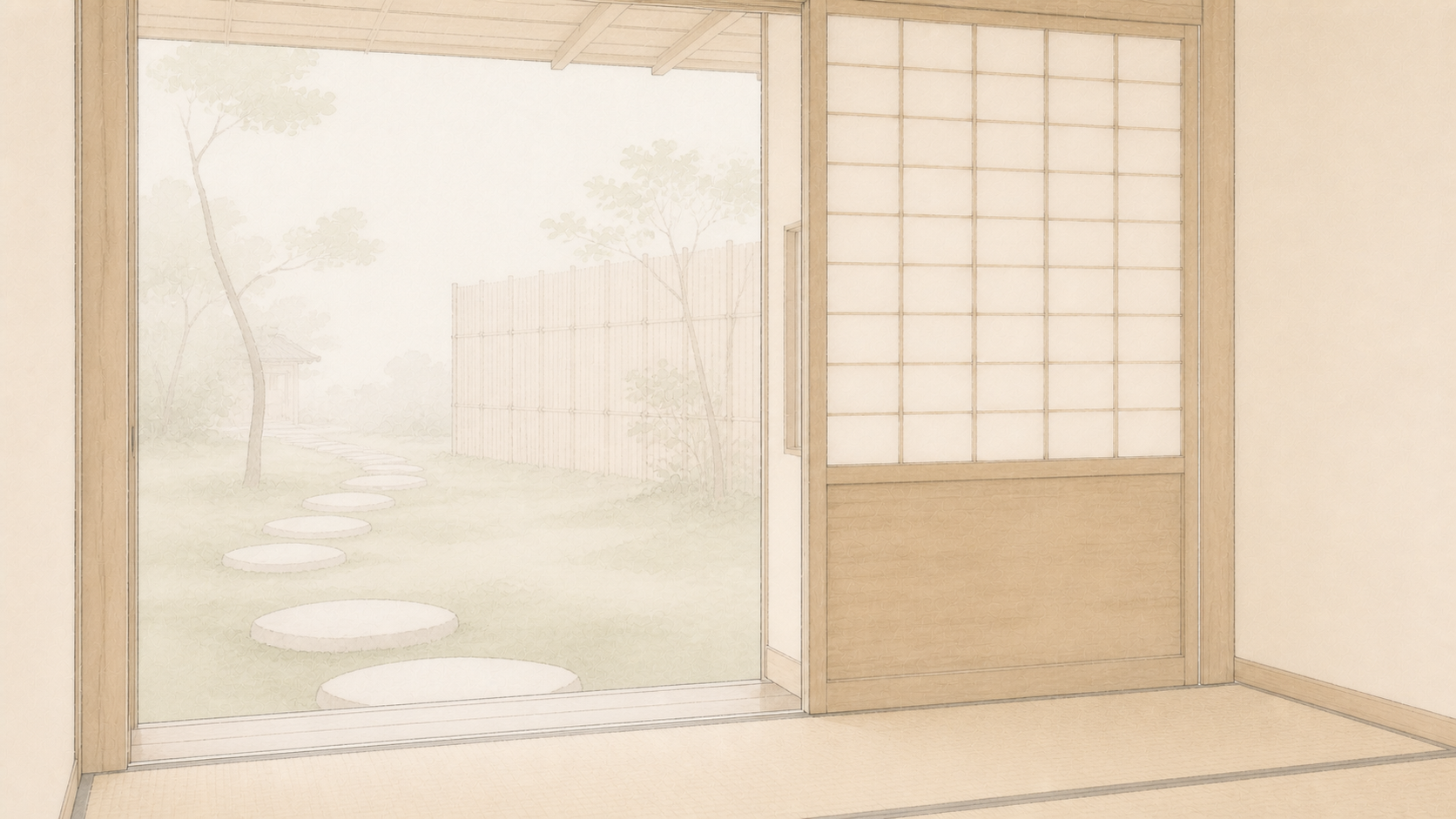
At the start of a formal tea gathering, guests straighten their clothes, leave their belongings, and drink hot water in the yoritsuki before going into the roji garden. This first room attracts little attention. How does it help guests move from an ordinary day into a tea gathering?
The yoritsuki is the first room where guests get ready
The yoritsuki is the first room to which invited guests are shown. In Omotesenke’s account of a formal tea gathering, they adjust their clothing, usually receive hot water from the hantō, the host’s assistant, and then follow the host’s direction to the outer roji. The alcove and kettle in the tea room draw the eye later. This room has the important job of receiving people at the start. Guests put right anything that shifted during the journey, set aside what they will not need, and check the small articles they will carry.
A short interval gives guests time to settle worries about delays or forgotten things before they go in. The yoritsuki is the first stage of preparing for tea, beyond simply a place to wait. Its position should lead people naturally from the entrance toward the roji without revealing too much of what awaits in the tea room. There is room for the garden to make its own impression when the first room keeps expectations in check.
The yoritsuki keeps the theme of the tea room in reserve, giving guests a neutral place to arrive and meet one another. What matters in this first room is how easily guests can get ready, rather than how much anticipation its decoration creates.
Leaving belongings behind changes how the body moves
A bag or coat in your arms gets in the way of walking through the roji, cleansing your hands at the tsukubai, or entering through the low nijiriguchi door. Setting bags aside and putting your clothes in order in the yoritsuki leaves the body lighter. The point is preparation for specific movements, rather than an ideal of living without possessions. Several guests will share a small tea room. Removing unnecessary belongings in advance keeps the paths and open areas inside clear.
A cloakroom or lockers at the entrance to a modern building can also help people attend to what they came to see or whom they came to meet. The yoritsuki helps guests select what they will need for the next part of the experience. This is the time to check for a folding fan, kaishi paper, and a sweet pick. Doing that here prevents a search for a missing item from interrupting the gathering later.
Taking off a coat or setting down a large bag makes it easier to walk through the roji and sit in the tea room. Leaving belongings behind gives you a chance to set the concerns and movements of the outside world aside for a while.
A cup of hot water slows the pace of arrival
The drink offered in the yoritsuki is hot water. Guests have just arrived, and the weather, the traffic, and the pressures of getting there are still with them. The short time it takes to drink the water moistens the throat and softens the rush of arrival. The order matters: the welcome begins with the quiet taste and scent of plain water before the guests are served matcha. It lets the senses settle before the garden presents them with something more.
Hot water seems to say very little, yet it tells a guest that there is time to stop hurrying. The first act of hospitality leaves room for what follows. When the vessel and serving are understated, guests can settle into their own breathing. Heat reaches the body faster than words, warming fingers and easing a throat tightened by the weather outside.
A sip of hot water gives a guest time to catch their breath and join the pace of the other guests. It marks an unhurried interval between arriving and entering.
A moment before the guests become a group
Guests meet in the yoritsuki. In the tea room the order runs from the principal guest to the second guest and on to the last. On arrival, though, each person still has their own concerns and the conversations they brought from outside. As guests greet one another and see how far along everyone is, people who arrived separately become a group ready to walk into the roji. They wait for one another to get ready. The yoritsuki is where their cooperation begins, alongside the host’s preparations.
The room works when people readily understand what to do next. Seats, a place for belongings, and a clear word of guidance mean the guests need not keep asking. The principal guest looks at how the others are getting on and helps time the move to the next place. The yoritsuki gives everyone a place to look out for one another and move on together.
An entrance that leads into the tea room in stages
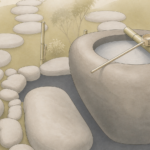
From the yoritsuki, the guests go out into the outer roji. They wait for the host at the covered bench, cleanse their hands and mouths at the tsukubai, and then enter the tea room. A room, a garden, an interval spent waiting, water, and a low door all form part of the entrance. With the change divided into stages, attention gradually shifts from the schedule outside to the stone and water close at hand. The yoritsuki alone cannot explain an entire tea gathering. Without this first stage, though, the roji could easily feel like a passage from one place to another.
Several small actions bring guests from one setting into the next, without an abrupt change of scene. The yoritsuki quietly starts that sequence. Preserving or recreating a tea room while losing the approach through the yoritsuki and roji reduces the experience to viewing one room. The smaller places around it give that room meaning over time.
What should an entrance make easy first?
At the entrance to a shop, museum, or inn, visitors may have a string of decisions to make. Do shoes come off? Where do bags go? Which way is next? If guidance comes too late, uncertainty builds up before visitors reach the beautiful interior. The yoritsuki suggests one way to begin: solve the practical problems in the order the body meets them. Put down your bag. Straighten your clothes.
Sit. Drink some hot water. Wait for the others. Follow the directions to the next place. When each step is clear, guests have more attention to spare. A good entrance lets the experience that follows begin easily. Places to put things and routes that are legible by their shape help even people who find written directions difficult. The yoritsuki shows what can be communicated by the surroundings and what calls for an explanation.
The same place receives the start and the end. We tend to judge the room we came to see. A good experience begins at arrival and lasts until departure. With room to set things down, straighten up, and collect themselves, people can enter the next place without strain. A room away from the center of attention can shape the quality of the whole visit.
Conclusion: Making room for the moments before a gathering
In the yoritsuki, tea is yet to be prepared and the noted utensils are still out of sight. Guests leave belongings, adjust their clothes, drink hot water, and find a pace they share. Those few quiet actions prepare the body to walk through the roji and receive a bowl in the tea room. The host’s hospitality is already at work on arrival, in a place that anticipates a guest’s uncertainty and hurry and gives both time to ease.
At the entrance to a tea room or cultural building, look at what is taken in, what is put in order, and what pace the place sets, as well as at the room beyond. The yoritsuki is a Japanese example of an anteroom that gives shape to the time before an event. At the end of the gathering the guests return to collect their belongings. The entrance becomes an exit and helps prepare them to step back into daily life.
 What Modern Design Can Learn from Rikyū’s Tea Rooms
 The Roji: How a Garden Changes Your Pace before Tea
 The Garden Waiting Bench: What Are the Guests Waiting For?
 The Tsukubai: Water and the Gesture of Lowering the Body