
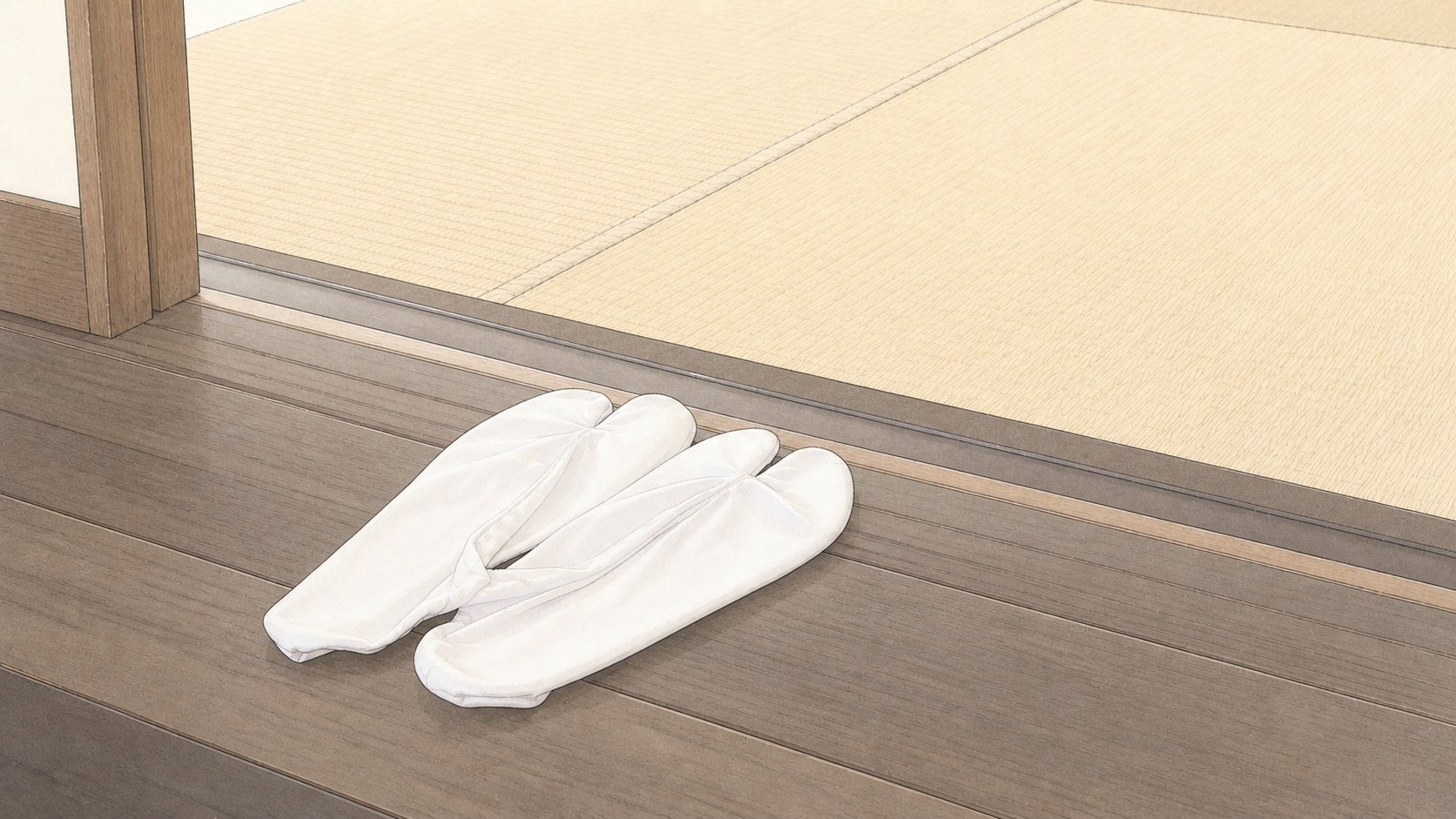
An invitation to tea may ask for white tabi or white socks with Western clothes. Guests look toward the alcove and the tea bowl, so their feet draw little attention. Yet they change into something clean and white. The reason begins where the foot meets the tatami.
What guests bring includes what they wear on their feet
Urasenke’s tea class guidance asks participants wearing Western clothes to prepare white socks or tabi and bring them with their personal tea articles. Instructions vary by school, the formality of the gathering, and the venue. White tabi with kimono and clean white socks with Western clothes are common choices. The emphasis falls on preparing the feet that touch the mat. A guest need not necessarily wear an entirely Japanese outfit.
Guests arrive at the entrance in outdoor shoes and remove them before going in. They prepare to switch from the socks they wore on the way to a clean pair. White tabi have a practical place in getting ready for the tea room. Follow any dress instructions in the invitation. Check what is needed for a gathering at tables, on tatami, outdoors, or in a lesson.
Tatami is both a floor and a surface for utensils
People sit on the tatami and rest their hands on it. Tea bowls and sweet dishes are set there as well. To a guest standing on it, tatami is a floor. It is also a working surface during tea preparation. Keeping dirt from outdoors off it protects a surface that hands and utensils come close to. Places where people walk and places where they set bowls are part of the same floor, so what one guest brings in on their feet affects the whole room.
The people responsible for the room clean it, and those who use it change into clean tabi at the entrance. Looking after the space is a shared effort. The custom asks guests to consider the surfaces other people and objects will touch. Fine dust catches in the weave, and it is hard to separate the areas for utensils completely from those for walking. Reducing dirt at the entrance means less cleaning once a gathering is underway.
White makes dirt easier to see
Small marks are harder to see on black or dark socks. On white tabi, dirt and wear show up readily. The color lets the condition of the fabric speak for itself. A white pair worn long enough to be soiled can fall short of that purpose, while a clean new dark pair can be perfectly hygienic.
White is useful because people can see how well a pair has been cared for and because it gives the guests a consistent appearance at floor level. When people sit together, bright colors or bold patterns are less likely to pull the eye away from the tatami, clothing, and utensils. White makes both the condition of the fabric and the care taken with it visible. It also brings the guests’ feet into a quieter visual relationship with the area where tea is made.
The effect of that uniformity is to return attention to the tea and its utensils, leaving people room for individuality elsewhere.
How the shape of tabi supports a seated body
Tabi have a separate pocket for the big toe, so they can be worn with zōri sandals. They have a sole and enclose the ankle, holding the outline of the foot as a guest kneels in seiza, sits down, or stands. A guest may turn on their knees or shift forward in small movements without stretching their feet out. The fabric keeps bare skin off the tatami, absorbing perspiration and taking the friction. The shape makes sense in relation to footwear, the floor, and the way people sit.
Where white socks are accepted with Western clothes, cleanliness and an understated appearance take precedence over reproducing the exact shape of tabi. Understanding the purpose makes it easier to adapt when arrangements differ. For some people, kneeling in seiza causes numbness. Asking in advance about a chair or a table-style gathering is safer for the person and the other guests than trying to conceal discomfort until they lose their posture.
The split at the big toe helps the feet overlap in seiza and the toes find purchase on the mat when standing. Tabi are clothing that supports a low posture as well as a sign of care for cleanliness.
Changing socks marks the passage from outside to inside
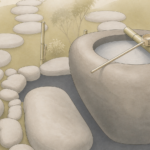
Some people leave home already wearing white tabi. Carrying a spare pair and changing at the venue separates what they wore outside from what touches the tea room. Like straightening one’s clothes in the yoritsuki or rinsing the hands and mouth at the tsukubai in the roji, this is a way to prepare the body at the entrance.
Changing takes only a few minutes. By doing it themselves, guests share in caring for the floor with the people who cleaned the room. A bag for spare tabi or socks lets guests keep the pair they took off apart from the rest of their belongings. Cleanliness also depends on how things are carried and put away.
Seen as a design question, the entrance or yoritsuki is where the body passes from outdoors into the setting for tea. Getting the feet ready here changes how the guest meets the tatami, utensils, and other people beyond it. The entrance is a place to change into a state suited to the room as well as a threshold to cross.
How to make dress guidance welcoming
When first-time guests are told that white tabi are simply a rule, the gathering may feel like an inspection of their clothes. Giving no guidance can leave the reason for taking care around the tatami and other guests just as unclear. The organizers can explain whether Western clothes are welcome, whether white socks are an option, and whether guests may want to change on arrival, according to the conditions of the gathering.
Part of welcoming people is giving them the means to follow the etiquette. Let them know what to bring. Say where it can be bought or whether there are items to borrow. For someone who has difficulty kneeling, explain whether seating or a table-style service is available. When guests know what a practice is for and what the options are, they can prepare in a way that works for them.
From the perspective of information design, good guidance puts the steps in an order a newcomer can follow. It explains what to bring, why it matters, what else can serve the same purpose, and whom to ask if there is a difficulty. A tradition becomes easier to enter when its standards come with intelligible reasons and a way to take part.
Conclusion: Looking after the room where few people look
Feet seldom appear in photographs, and guests watch the alcove or the preparation of the tea. Yet those feet touch the tatami, the same surface where people sit, place their hands, and set vessels. White makes the condition of the fabric easy to see, and its restrained appearance lets the rest of the setting hold the eye. Preparing for a gathering gives you a chance to notice where you get ready after coming in from outside and how you step onto a floor you will share.
The custom at floor level is a small and practical way to acknowledge that what you do affects other people and their utensils. Looking at the beauty of a bowl or scroll begins with preparing the feet that meet the floor beneath it. The care taken there supports a room in which utensils can be looked at attentively. White tabi help keep the mats and objects clean and make the room comfortable for the other guests. That preparation comes before any signal of formality.
If the dress rule is treated purely as a matter of appearance, it can make participation harder for people with physical needs. Understanding why it is there makes it possible to consider other ways to take part while keeping the room clean. That is how a custom continues to be an active form of care.
 What Is Sadō? How the Japanese Practice of Tea Designs Relationships
 What Does Temae Put in Order? How Movement Connects Utensils and People
 Why a Summer Tea Gathering Begins at Dawn
 The Tsukubai: Water and the Gesture of Lowering the Body