
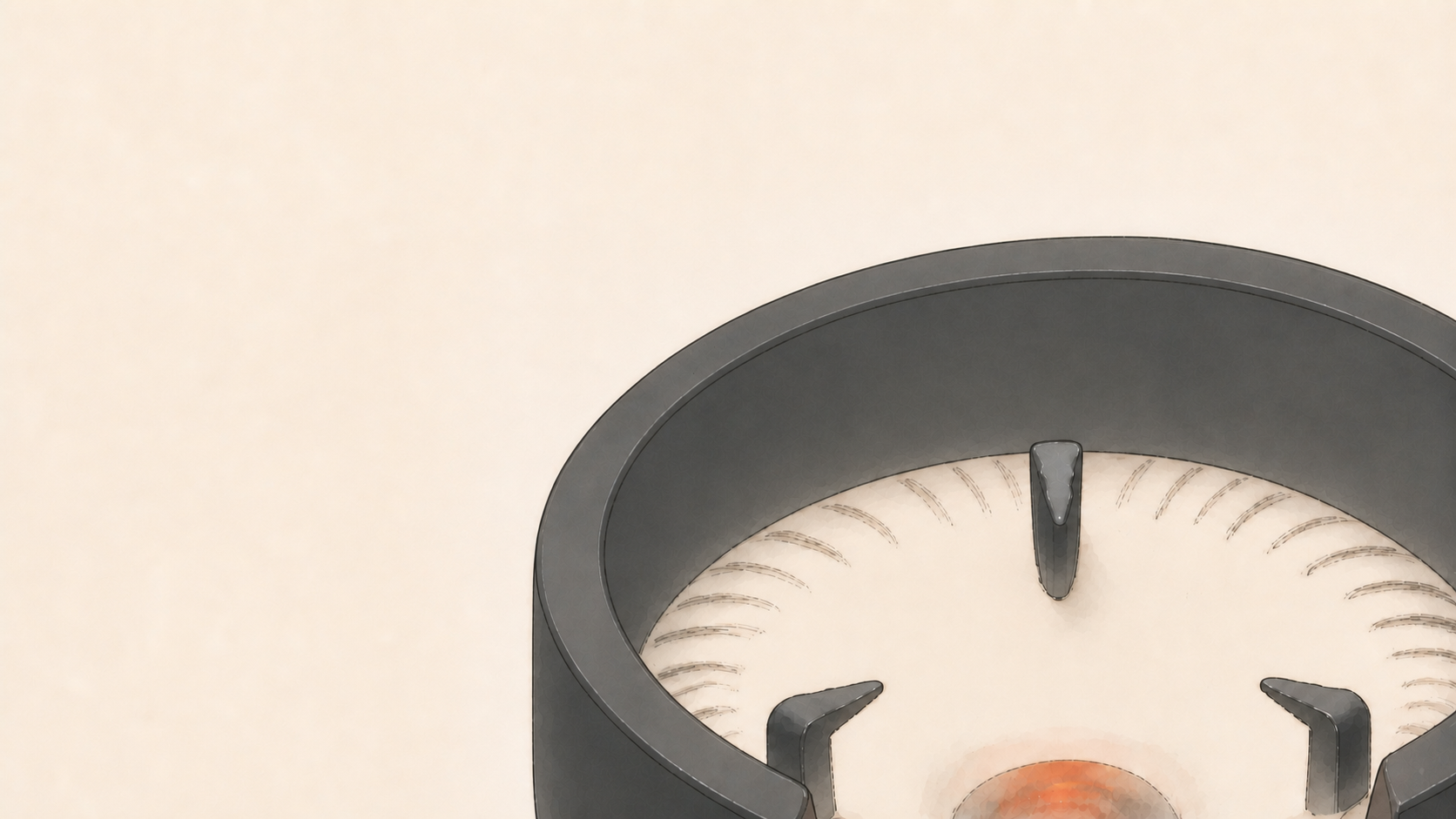
In October, as the portable brazier season comes to an end, a gathering called nagori no cha turns attention to the little tea that remains, the utensils worn by use, and the autumn that is passing. What does it take to give an ending that kind of attention without staging the appearance of age?
What Is Nagori no Cha?
Nagori no cha is a gathering held around October near the end of the portable brazier season, when people are reluctant to see the season go. Omotesenke describes the supply of leaf tea left in the jar after the opening of its seal, or kuchikiri, dwindling over the year. The older tea gives people a taste of what remains of autumn. The format is much like a midday tea gathering, without a fixed set of special utensils.
Nagori has more to do with where attention goes than with the names of the objects. There are fewer days left for using the portable brazier, the year’s tea is nearly gone, and the flowers are past their height. The ending itself becomes the subject of the gathering.
If nagori no cha meant just using old-looking things, it would be easy to stage a display of chips and repairs. Its materials point to something that is actually happening: the season of the brazier is ending and little of the year’s tea remains.
Flowers can be chosen for a stage past their strongest bloom. A wilted flower will not do simply because it is wilted. Look for a line or color that still works while the season is coming to an end. It takes a close eye to notice that change.
Sharing the Tea That Remains
Fresh matcha can now be bought throughout the year. When people used the leaf tea from the same storage jar from the time of kuchikiri, they could feel the supply dwindling toward the end of autumn. Nagori no cha shares the feeling of making the most of a last serving.
Rarity is only part of that feeling. The time spent using the tea through the year comes together in that bowl. What is left can have a different flavor and fragrance from the new tea. Finishing it with care and gratitude means attending to a point in the life of things that is often easy to overlook.
A well-used vessel carries a history of being washed, held, and stored. That history can give it something a new piece lacks, though age alone makes no masterpiece. Choose a piece whose presence makes sense in this gathering, with these guests and the other utensils.
Letting Wear and Repairs Show
Well-used utensils and vessels with repairs can suit a nagori gathering. A chip or a joint bears a mark of time absent from a new object. What matters is that someone worked on the piece so it could be used and returned it to the gathering.
The line of a repair leaves the original form legible and changes its appearance. The older damage and the use of the vessel now can be seen on one surface. Nagori no cha makes room for a piece that has changed and still has a life in use.
For me, nagori teaches people to notice what is left. When another of the same thing is always for sale, it is easy to miss an ending. Little tea is left, the season of the flowers is passing, and the brazier is about to go away. Those limits give more weight to a bowl.
Looking at Flowers Past Their Peak
A field in late autumn holds branches beginning to fruit, leaves with insect holes, and grasses dry at the tips alongside open flowers. What is chosen for tea can show the season passing into another stage.
Choosing a weak flower for the effect does not bring out nagori by itself. The stem needs some life left and something worth seeing in how it looks at that time. The end of a season and neglect are different things. It takes judgment to see what is still doing work as the plant changes.
The feeling of regret does not require a return to the past. The end of the brazier season lets the next hearth season open. A careful last look at what has been used makes room for the transition. The depth of the gathering comes from attending to the ending itself.
I think of nagori no cha as a chance to look over things before putting them away. Take up a utensil used often this season, notice the wear, and decide what to carry forward and what to let rest. Taking leave of something can lead to caring for it.
What Worn Utensils Can Tell Us
Nagori can give the appearance of want if it is understood only as a display of old, chipped, or leftover things. A gathering can make visible the host’s connection with the things they actually used that year.
An unnamed piece handled every day may serve better than a recent purchase made to look old. Nagori draws on the history of use. The host knows which piece served which gathering and where the surface changed. Those particulars give the guest a genuine sense of taking leave.
When you see a well-used piece, look beyond the number of marks. Where has the rim worn? Has the glaze changed color anywhere? How does the repair hold the old form together? Those details lead to how the piece has lived in use. Looking old and having been cared for have different histories.
The host can take up what has been used in the brazier season once more. Guests and host can share a look at changes that become visible because the season is almost over.
Nagori When We Can Always Buy More
What can nagori mean when we seldom run out of things? There is no need to recreate the old limits on leaf tea. The end of a season can be a point at which to stop and notice what has been used and for how long.
When the same goods are available all year, beginnings and endings can be hard to see. Giving attention to the last tin, the last flowers, or the last use of the brazier can make the coming hearth opening feel like a renewal. Nagori gives time an edge that contemporary routines can blur.
The point of sharing what tea remains is to taste something together now that will not return in the same form until another year. When host and guests share an ending, the serving gives them a share of that time.
When replacements are easy to buy, it can take a deliberate choice to finish using something first. Notice the same utensil to the end of the season and the wear and familiarity can become part of what you value in it.
Closing | What an Ending Brings into View
Little tea remains, the utensils show use, and the flowers are past their height. Through these things, nagori no cha gives people a way to see how much time has led up to an ending.
An ending can be the moment when it is clearest what is left and what can be taken forward. Attending to something until its use is over can be a richness in itself.
Knowing that the hearth will open again lets people spend time with the brazier’s last days. Finishing the final bowl with care leaves a little room for the next season.
The brazier’s fire, the vessels still in use, and the remaining flowers give the guests a chance to look closely once more. They can notice what the season has changed while those things are still in front of them.
 Flowers at the Second Sitting: How a Tea Gathering Changes the Alcove
 Autumn Grasses in a Basket: The Lines and Gaps Between the Stems