
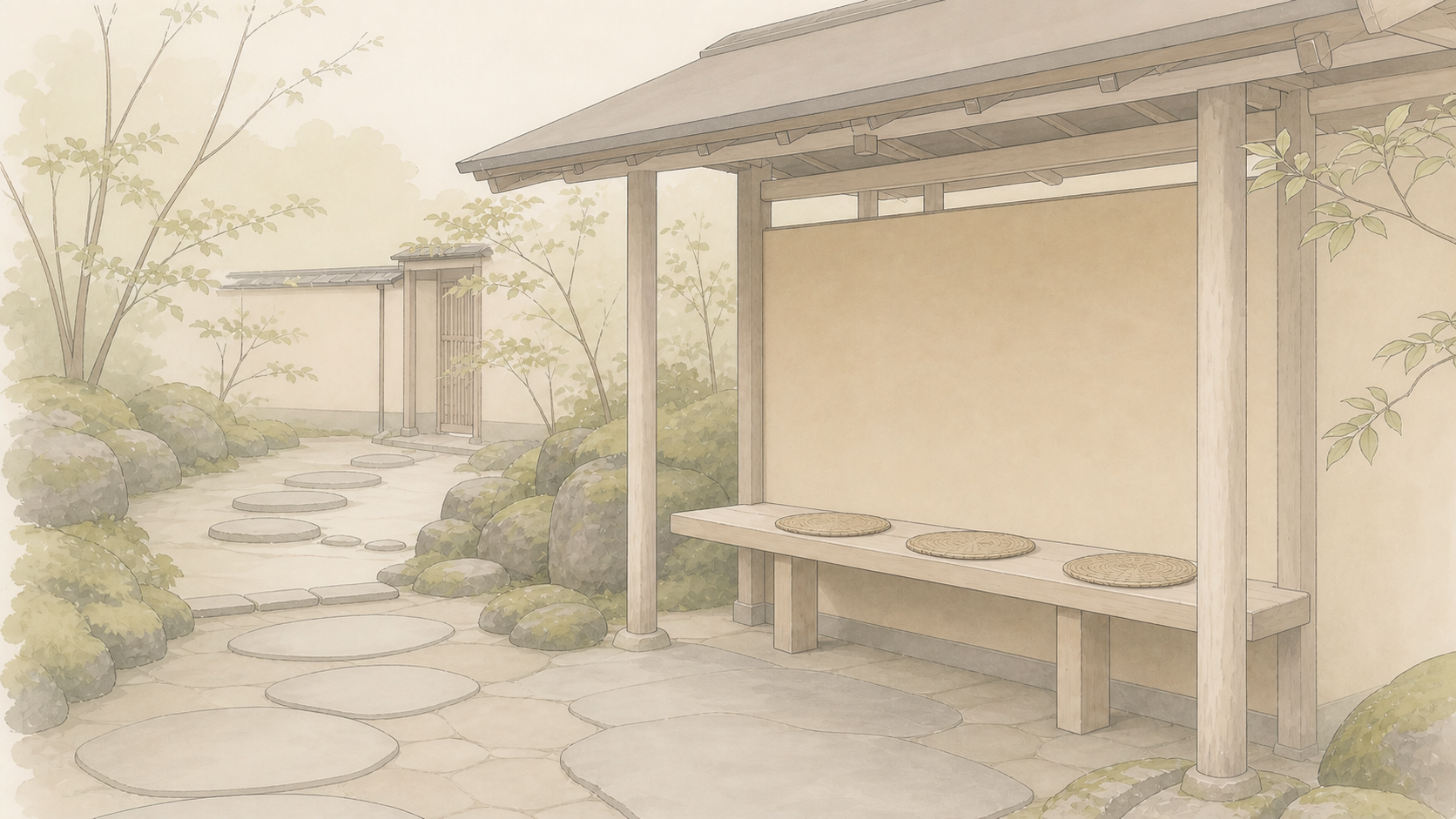
Guests who enter the roji do not go straight to the tea room. They sit at a sheltered waiting bench, the koshikake machiai, until the host comes to greet them. How does a stretch of time in which little seems to happen change their pace and prepare people who arrived separately to share a gathering?
A sheltered place to wait in the tea garden
The koshikake machiai is a covered bench in the roji garden. In the procedure described by Omotesenke, guests go from the yoritsuki anteroom into the outer garden, put on roji sandals, sit on round cushions, and wait for the host to greet them. The moisture of the garden, the wind, birds, and the presence of other guests help the body settle into a different pace. A bench in the garden still lets in the outside air.
A small roof provides shelter from rain or strong sun, and the bench gives guests somewhere to sit. Between the garden path and the tea room, they can settle without closing themselves off from the outdoors. The height and depth of the bench affect how easily a guest in a kimono can sit and stand. A bench that blends into the garden but does not support the body will turn a guest’s attention to discomfort.
The bench gives the guests a place to wait for the host and begin to gather as a group. It sets aside a part of the garden for the time before they enter the room.
Waiting for a signal
A delay at a station or reception desk can feel like lost time. The wait at the garden bench is part of the course of the gathering. Guests know that what they are waiting for is the host’s greeting. The host refreshes the water at the tsukubai basin and approaches the middle gate.
The guests see the host and rise from the bench. The wait ends through another person’s action rather than a time on a clock. A well-tended garden, fresh water, and signs that the host is nearby can help people sense that preparations are under way.
Small signs of work out of sight can put the guests at ease.
Sitting side by side brings the group together
The guests sit in order around the principal guest. When people know who will rise first and in what order they will approach the gate, they can move without calling to one another. They can wait for someone who is late, notice the person beside them, and rise at the same signal. Separate arrivals become one gathering.
I look at where the people seated on the bench can see. When they can follow one another and sense the direction from which the host will come, waiting becomes part of getting ready together. Knowing the order keeps the garden quiet and makes it easier for everyone to move.
How a simple roof directs attention
A garden bench needs enough shelter for people to sit out of the rain. Its spare furnishings give the eye fewer things to stop on. The stones, moss, water, and movements of the host become more noticeable. A furnished reception room could occupy the guests’ attention before tea begins. Here the garden opens their senses without explaining what comes next.
A roof and bench leave the air and season present. A fully open view could show the destination too early. Close it entirely and the guest may feel unsure. From the bench, enough of the gate and the host’s approach are apparent while the whole room stays out of sight.
Deep eaves keep off sun and rain and cut off the upper part of the view. The foot of the garden and what is near the bench hold attention.
The bench in the inner garden marks another transition
After eating the main sweet, the guests leave the room for nakadachi, the middle break, and rest on a bench in the inner garden. The first bench is a place to wait for the greeting. The bench during the break gives the guests a place to wait for the second sitting. Meanwhile, the host rolls up the scroll, arranges flowers, checks the fire and water, and prepares the utensils for thick tea.
A bench of the same kind plays a different part depending on when the guests sit there. The pause after kaiseki lets them change posture, feel the outside air, and prepare to give their attention to the thick tea of the second sitting.
After the main sweet in the first sitting, guests rest on the bench in the inner garden. They sit as they did in the outer garden while waiting for the host to greet them, this time to wait for the second sitting.
Waiting needs more than information
Waiting rooms today sometimes fill time with screens, magazines, music, and advertising. A tea garden gives people somewhere to wait for what happens next without adding much information. In a hospital or station, people still need to know the likely duration and their place in line. Even with that information, there is room to leave part of the wait quiet.
A window looking outside, a seat with a surface you can feel, and enough space to move without rushing each other change how time feels. The garden bench changes what the wait is like even if it cannot shorten it. A phone can give each person a separate stretch of time. The shared view and signal let guests stay together without conversation.
A pause can help people set one thing aside and get ready for another. The garden and the host’s signal give the waiting guests something to attend to. The time is allowed to remain quiet.
Conclusion: Waiting is part of the gathering
At the bench, the guests sit among the sounds and air of the garden and wait for the host’s signal. Their pace begins to come together. The greeting becomes the first encounter between host and guests rather than just a cue to enter. At another bench or waiting area, notice where people look and what makes them rise.
A place to wait contributes to the experience that is about to begin. The few minutes before the host appears give guests time to prepare to see the room and take part in the gathering. In places organized for efficiency, that waiting time can look like time to cut.
 The Roji: How a Garden Changes Your Pace before Tea
 What Modern Design Can Learn from Rikyū’s Tea Rooms
 Why Switch Between the Ro and Furo? How Moving the Fire Changes the Tea Room
 The Tsukubai: Water and the Gesture of Lowering the Body