
Furuta Oribe studied tea under Sen no Rikyū and went on to develop a bolder aesthetic of his own. A warrior, tea practitioner, and organizer of cultural life, he moved among the people who made tea utensils and the people who used them. His two names are a place to begin: Furuta Shigenari the warrior and Oribe the tea practitioner.
Furuta Shigenari the warrior, Oribe the tea practitioner
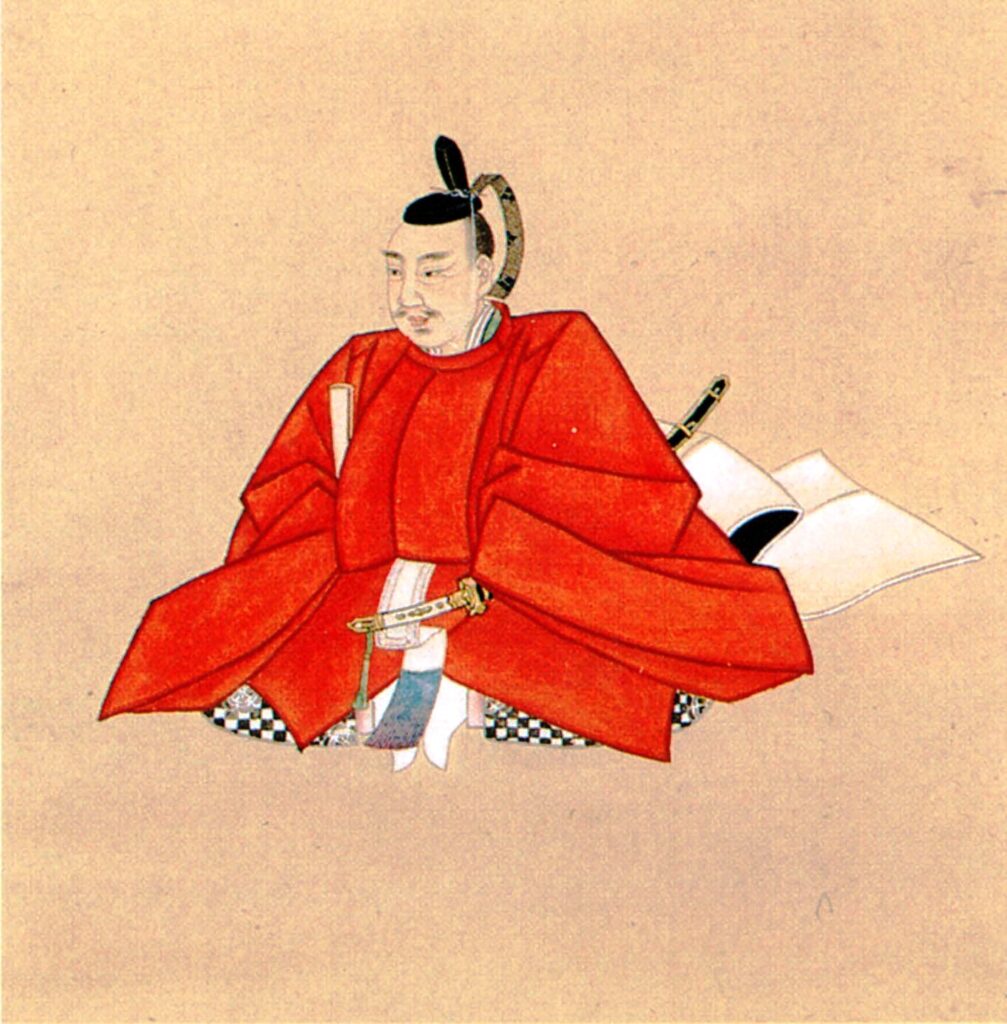
Furuta Oribe was a warrior and tea practitioner who lived from the Momoyama period into the early Edo period. His personal name was Furuta Shigenari. Oribe derives from the title Oribe no Kami. He pursued a military career in the age of Nobunaga, Hideyoshi, and Ieyasu and studied chanoyu with Sen no Rikyū.
After Rikyū’s death, Oribe became a highly influential tea practitioner, particularly among the warrior elite. He hosted gatherings and took part in selecting and making utensils and arranging tea rooms and roji gardens. His work was closer to that of a cultural organizer who brought makers and settings together than to that of an artist producing a single work.
Oribe’s aesthetic could unsettle standards that had begun to harden and make people look afresh. The unusual shapes were a means of doing that.
Taking up Rikyū’s tea and moving in a different direction
Oribe inherited Rikyū’s wabi tea. Where the quiet presence of a black Raku bowl depended on a restrained form and color, Oribe brought distortions, abrupt transitions, and bold designs to the fore.
What he inherited may have been Rikyū’s readiness to question established values. That would explain how a pupil could arrive at such different answers from his teacher.
Deliberately reshaping the utensils
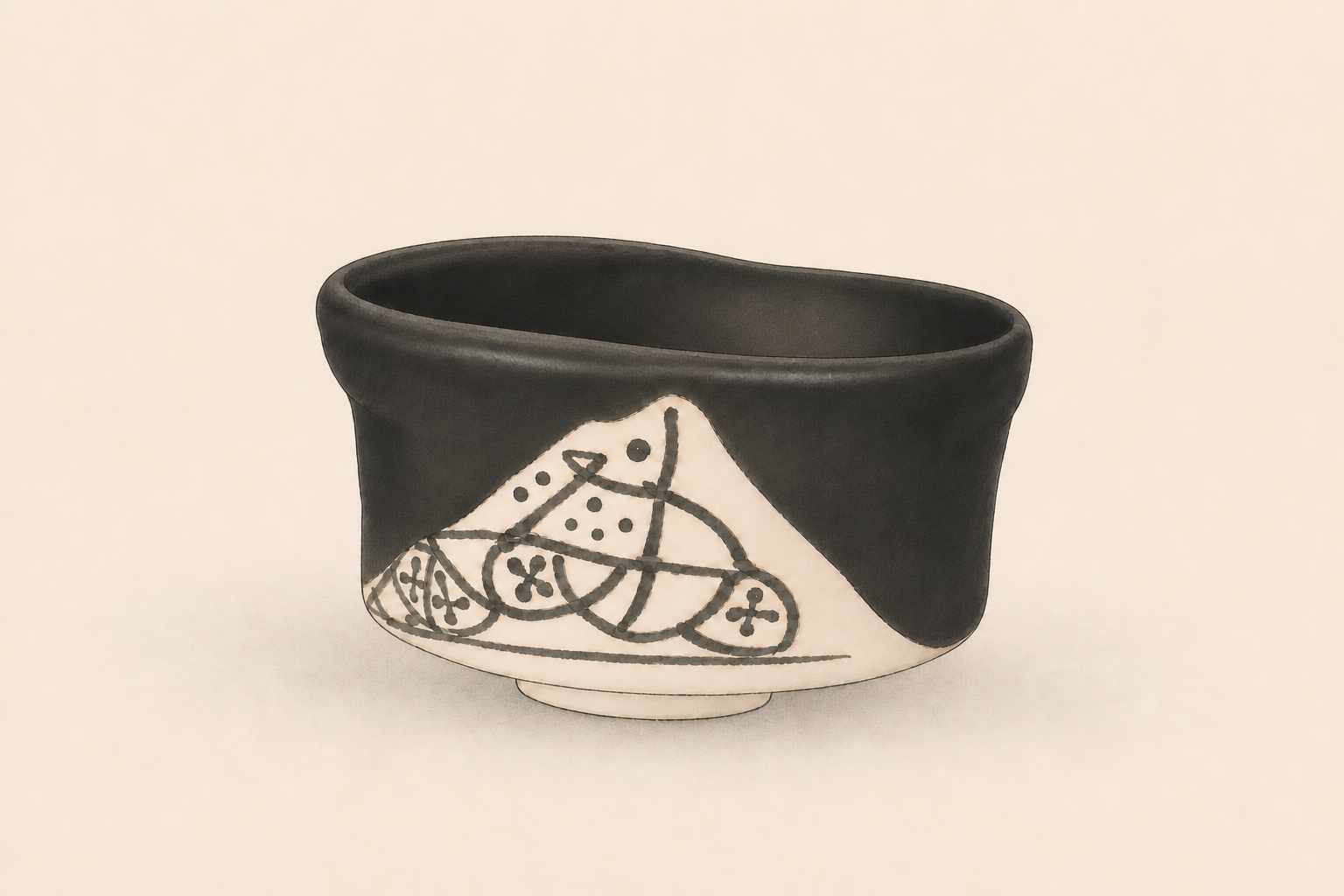
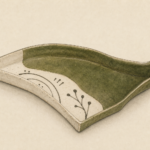
Bowls associated with Oribe include kutsugata, or shoe-shaped bowls, that look as if a circle has been pressed out of round. Other examples shift abruptly from black glaze to a pale ground. Their outline changes considerably as you move around them.
These are deliberate departures from a regular form. The familiar outline makes the shift visible. The resulting movement and tension put a small decision back in the hands of the person holding the bowl: where is its front?
A round bowl can be pressed into a shoe shape, its rim made to rise and fall, and different areas glazed differently. These choices give the viewer more than one direction from which to look. Their effect depends on knowing the regular shape well enough to choose where to depart from it.
Turn a bowl in your hands and the distortion allows several faces to emerge. The rim flows differently along the long side and the short side, and the shape of the interior changes with your grip. The experiment in form gives the viewer more to do.
The wit of hyōge
Oribe’s taste is often described through the word hyōgemono. It is related to hyōgeru and carries a sense of eccentricity and playfulness. His interest went beyond collecting amusing shapes.
A small step away from a familiar form brings that form itself to your attention. After the initial surprise, you notice the bowl’s weight, its blank areas, and the placement of the design again. Humor loosens an established way of looking as well as lightening the encounter.
A playful shape can make you turn the bowl without thinking or compare impressions with the next guest. A laugh gives the hands and the conversation something to do in an encounter where the reputation of a treasured utensil might otherwise encourage silent admiration.
A slight tilt or a shift in the pattern can be witty because people remember the regular form it plays on. That shared reference leaves room for an individual discovery, which in turn gives the guests something to talk about.
A leading tea practitioner in the world of politics
Oribe taught tea to many daimyō and became a central figure after Rikyū’s death. In 1615, after the Summer Siege of Osaka, he was ordered to take his own life. The political circumstances matter to the account of his death as much as his standing in tea.
Like Rikyū, Oribe worked close to political power and lived with the tensions of that position. His bold forms expressed an unusual freedom and took shape in an age when the political order was changing rapidly.
For a warrior who also practiced tea, choices about whom to invite, what to serve with, and what procedures to show could carry political weight. Oribe’s life and death make it difficult to treat formal invention as wholly separate from power.
Oribe’s place in the warrior elite shaped the company he kept and the utensils he brought into a gathering. His biography and his work belong together when we ask how new forms were received in circles close to power and where their reception could become precarious.
Oribe’s way of putting things together
Looking only at ceramics leaves a narrow impression of Oribe as a man who liked distorted forms. At gatherings he still used Chinese tea caddies, bringing them together with newer Japanese ceramics, boldly shaped water jars, and vessels for the meal.
Objects of different standing or periods can sharpen one another’s features when set in the same room. Put a distorted bowl next to a regular one and both contours become more apparent. Oribe’s character comes through as much in the way he brought such objects into one gathering as in the shape of a single piece.
In contemporary design, giving every element the same treatment can make a whole look orderly. Push that too far and the eye has nowhere to stop. Keeping the overall order while introducing one form or color that differs gives that difference something to do. Oribe’s combinations work in that way.
Oribe also knew the order of the battlefield and political life as a warrior. There is a striking contrast between that experience and his choice of utensils that depart from symmetry. In his case, freedom in form came from someone who knew strong forms of order firsthand.
Oribe taught tea to many daimyō after Rikyū’s death. By giving makers an idea of what to produce, using the objects in gatherings, and teaching pupils who then carried their way of seeing elsewhere, he linked utensils, settings, and instruction. That is how a personal taste could spread.
Conclusion: Opening up the standards of beauty
Calling Oribe eccentric accounts for only part of his work. He asked whether order, expense, and conformity to rank were the only conditions of beauty.
Departing from an established form makes room for another way of seeing. Oribe can be read as a designer who opened up the standards by which a utensil might be judged beautiful.
His creativity comes into focus when we ask how he passed on his ideas. An idea that begins with one person can take hold where people make, use, and talk about the objects that give it form.
 Why Oribe Ware's Distorted Shapes Are Beautiful
 How Furuta Oribe Changed the Tea Room
 Hyōgemono: The Playful Side of Furuta Oribe’s Tea
 Who Was Kobori Enshū? The Tea Practitioner Who Brought a New Refinement to Tea
