

When charcoal burns, the ash it leaves is sifted, brought to the right moisture, and tended over years for use in chanoyu. It becomes the bed for the next fire. To understand what we see in the hearth, start with the time that has gone into caring for its ash.
Ash Is the Ground for the Fire
In a sunken ro hearth or a furo brazier, the ash is the ground on which the charcoal rests. Its condition and shape affect where the pieces can sit, how air moves, and how the fire spreads. One of Rikyū’s seven precepts is to lay the charcoal so the water boils. The charcoal, ash, air, and position of the kettle all help bring the water to the state it needs to reach.
An uneven ash bed can make the charcoal unstable and the airflow irregular. The bed has to work before its surface is given a finished shape. Guests see only a little of the top, while heat and air move within it. With ash, the surface that people see is part of the material doing the work.
The depth and shape of the ash affect the height of the charcoal, how air reaches it, and the distance to the base of the kettle. The ash is the terrain the fire works on.
Care Begins After the Charcoal Burns
Ash can contain pieces of charcoal and other debris. It is sifted, checked, and prepared for a particular use. In a lesson at Urasenke Gakuen, students felt the difference between ash two to three years old and ash twelve to thirteen years old with their fingertips. The passage of time alone does little. Using, sorting, and storing the material changes its texture and moisture. The care it receives becomes part of how it works.
Reusing ash takes judgment about what to keep. Lumps and debris are removed, the grain made more even, and the ash stored according to its use. Keeping everything would leave work still to do before the ash could serve again. In recycling today, too, restoring the material to a useful quality is often harder than collecting it. The practice of tending ash offers a concrete example of that work.
Removing spent fragments, adjusting moisture, sifting, and tending the ash each season prepares it for the next fire. The point at which one fire goes out becomes the beginning of preparations for another.
Feeling the Texture Before Giving It Shape
Pressing down hard is no guarantee of a good ash bed. The host chooses an ash spoon or other tool to suit the fineness and moisture of the ash and the shape of the brazier. Ash that is too dry can crumble. Too damp and it becomes heavy. Before drawing a line, the host feels how the ash moves that day and changes the movement of the hand accordingly.
The fingertips can tell whether the ash flows freely, holds the mark of a spoon, or clumps. That sense develops through repeated comparisons. At Tokyo Muichimotsu, we think of aesthetic understanding as the ability to notice what is there. The more often you work with a material, the more specific your judgment about it can become.
The weight, the way the ash crumbles, and the uniformity of the grains, felt with a finger or ash spoon, tell you whether the material is ready to take the fire. The lines it can hold depend on its texture.
The Landscape of Ash Around the Fire
The surface of the ash in the furo is shaped in a form known as haigata. The form varies with the school, season, and utensils. Its planes and lines are beautiful, and they also mark where the charcoal goes, organize the space around the fire, and make it easier to handle ash and charcoal during the tea procedure. The visible landscape comes out of the work of tending the fire.
Isolating the lines can make shaping the ash look like a display of skill. In use, the surface defines the area for the charcoal and helps guide the host’s movements. A line that draws more attention than its job requires can disturb the harmony of the gathering. Haigata is a delicate example of how closely appearance can follow function.
How the Ash Appears in the Hearth and the Brazier
In winter, the fire in the ro can feel close to the guests and warm them. In the furo the fire sits above the tatami, where the ash is easier to see. The form of the vessel, the location of the fire, and the season give the same material a different look and role. Even the location of the heat and the handling of the ash change with the season.
The two settings give guests a different view of the ash and a different sense of distance from the fire. The winter hearth brings warmth nearer. With the brazier, the whole arrangement, including the shape of the ash, becomes part of what is visible above the tatami. Seasonal changes in chanoyu can be felt through the body, through the heat and the way materials are brought into view, as well as seen in a pattern of blossoms or autumn leaves.
Keeping Ash in Use Takes Care
Reuse might sound like a way of saving money. Keeping ash in use also takes sorting, storage, adjustment, and practice. What is left has to be brought back to a state in which it can serve again. The ongoing value of ash comes from the work people have put into it over time.
The qualities of old ash carry a history of use and care as it passes from fire to fire. The same is true of old utensils. The way people work with them matters more than how long they have sat untouched. Continued care gives people a way to take part in creating value that extends well beyond the purchase of a finished thing.
Tending ash means sorting material changed by charcoal and moisture, then making repeated decisions about what it needs to do in the next fire.
Conclusion: The Ash Beneath the Next Kettle
The ash left after one fire becomes material for the next. It is sifted, stored, adjusted for moisture, and shaped for the hearth or brazier. Years of care change the texture and help the charcoal and air do their work. Look below the charcoal the next time you see a hearth or brazier. In that still surface lie traces of earlier fires and the conditions for the water that will come to a boil.
The time spent tending a used material is part of what we see in the tea room. Ash remains when charcoal burns, takes on the effects of care, and supports fresh charcoal. An apparent end supplies the conditions for another beginning. Seen as a practice of continuing care, the appreciation of age in chanoyu makes ash a remarkably contemporary material.
Looking into the ash gives us a way to see value in work still under way.
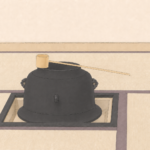 A Bamboo Ladle for Measuring Water and Marking the Seasons
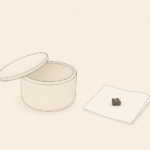 Where Is the Scent in a Tea Gathering?
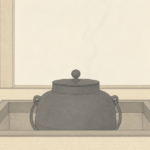 What Does a Kettle Tell Us? Listening to the Water in a Tea Gathering
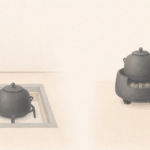 Why Switch Between the Ro and Furo? How Moving the Fire Changes the Tea Room