
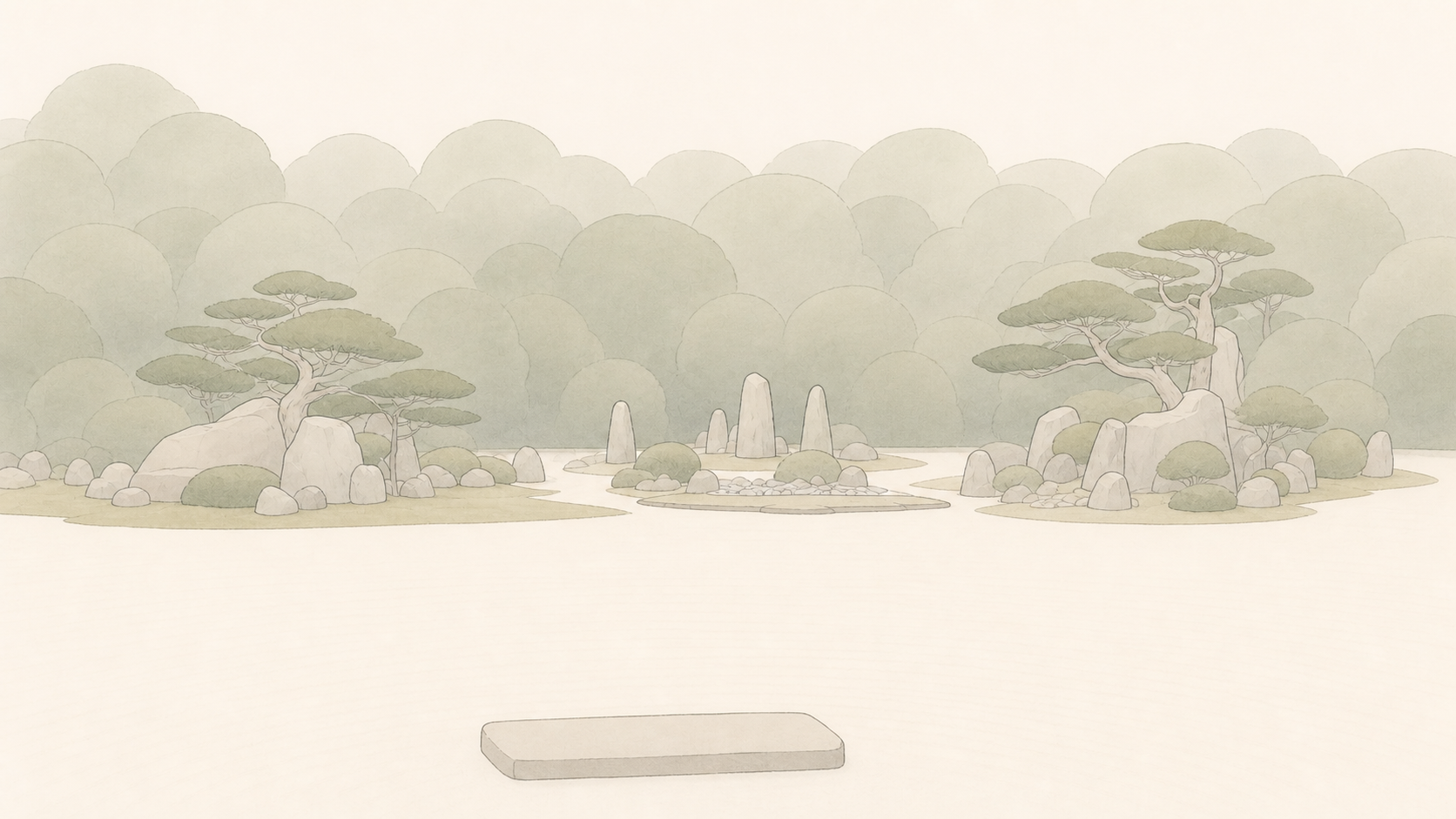
Stones, plants, water, buildings, and views into the distance meet in gardens associated with Kobori Enshū. Their design shapes the view and the order in which we walk through it without controlling everything nature does. The story begins with Enshū’s work in architecture and garden design.
Enshū, architecture, and garden design
As a construction magistrate for the shogunate, Kobori Enshū worked on buildings and gardens. Kohōan at Daitokuji and Konchi-in at Nanzenji are often cited as representative projects.
Historic gardens have been altered over the years, and care is needed in deciding what can be attributed to Enshū himself. Even so, there is something of his aesthetic to read in the sequence of looking out at a garden from a building and approaching the building through the garden.
Rather than fixing Enshū’s gardens into a single style, consider how the garden works with the purpose of the building, the movements of the guests, and their view from inside. Follow the route from the gate to the entrance, the reception room, and the tea room, noticing where your view narrows or your pace changes.
A framed view from a room and the view along the approach from the gate are two different compositions. A garden can set a viewpoint for each use and connect them through the way people move.
A garden holds more than one view
In a photograph, it is natural to look at a garden as a finished composition seen from the front. As you walk through it, its appearance changes with your position.
The direction of the stepping stones, the position of a gate, and the overlap of plants can each change what comes into view next. Arranging a garden means arranging the order in which things are discovered as well as setting the stones in place.
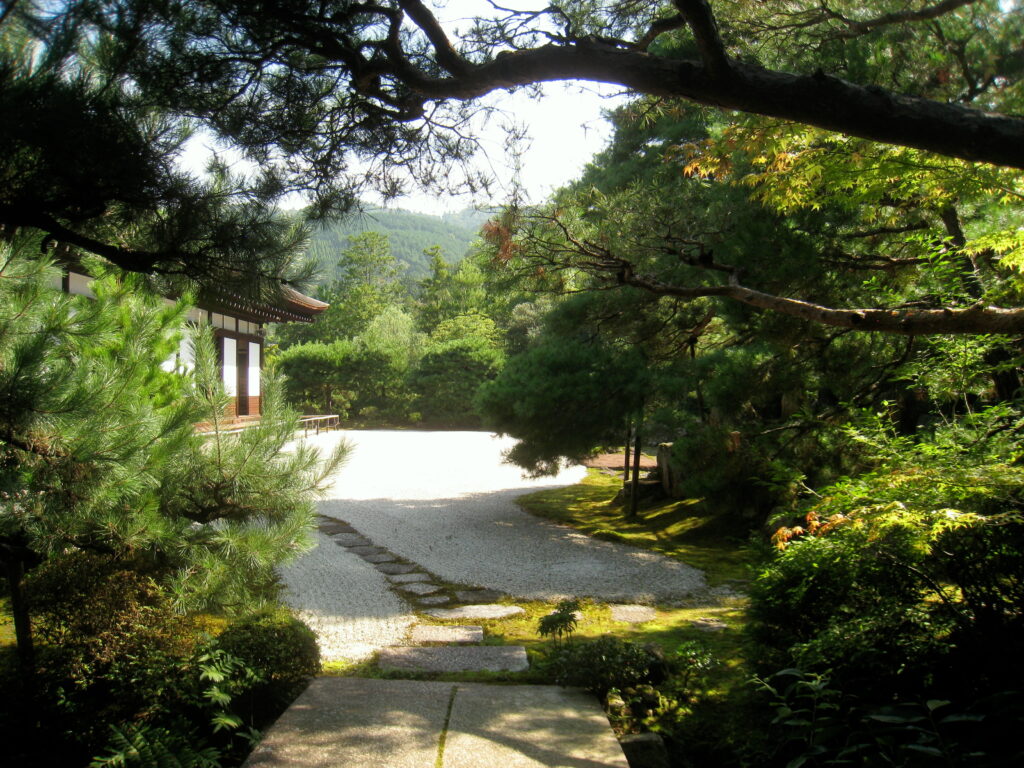
Stones and plants in the foreground, water and raised ground in the middle distance, and mountains or sky farther away change their positions relative to one another as you walk. A stone can play a different part when you see it seated or on the move. A garden’s composition takes time to experience.
Morning or evening light, the amount of foliage, and your direction of travel all change how the layers look. A garden can let those things change and still make its underlying arrangement of stones and contours legible.
Stand in the same place in another season and you can begin to distinguish the garden’s structure from its appearance on a particular day.
Borrowing a view beyond the garden
Shakkei, or borrowed scenery, brings trees or mountains outside a garden into its composition. By choosing where someone looks from, the designer can make distant scenery part of the view.
Change the height of a wall or the opening between plants and the same mountain looks different. The design changes the relationship with something already there.
A wall or trees can screen part of the view so that a roofline or mountain ridge appears at the right height. The foreground boundary brings the view inside and outside the grounds into one composition.
A gardener cannot reshape a distant mountain. Adjusting the height of trees and walls and choosing a viewpoint allow a particular ridge to enter the composition. Something outside the gardener’s control becomes part of the view through careful work on the boundary.
The foreground still needs to hold together on days when the borrowed scenery is hidden.
How stones and plants set the pace
Close stepping stones invite short steps, and a stone set at a different angle turns the body. A branch across the view can slow you down. When the space beyond opens up, you may stop.
A garden can guide your pace with small changes underfoot and in your field of view. They shape the time you have to look at what is growing around you.
The spacing and angle of stones and the gaps between plants guide the stride and eye. A route can alternate places where you look down and places where you look into the distance. The pace comes from the steps your body can comfortably take.
Small stones in close succession slow you down. More space between them may prompt you to look up. If planting conceals the view and a turn reveals water, the walk itself gives you that view. Stones and sightlines share the work of guiding the body.
Making room for nature to change
Pruning trees and placing stones are deliberate interventions. A garden will be difficult to keep if its form takes no account of how trees grow or how the ground lies.
The gardener supports the view while working with materials that change from season to season. The garden takes shape again through its upkeep.
Katsura Imperial Villa in Enshū’s time
Katsura Imperial Villa helps us understand the aesthetic of Enshū’s time. The buildings and garden took shape over a long period and bear the decisions of several people. The ways of seeing that developed in that period tell us more about the view than attributing the whole villa to Enshū alone.
Seen from inside, the garden is framed by posts and shōji screens. Where you sit changes how much you see. Outside, the stepping stones change your stride and turn your body and eyes little by little. As you walk, the pond, stones, and plantings open up successive views.
The garden mediates between the landscape and the body. Stepping stones guide walking speed through their spacing and direction. Posts set the limits of the view through their position. Neither requires a written instruction.
Even a carefully arranged garden admits the changing foliage, the dampness of moss, the angle of light, and the sound of rain. The relationships among stones, ground, and buildings allow those things to change without dissolving the composition. Ongoing care leaves room for growth and weather.
Pruning can account for the light and wind of the coming season as well as the outline of a tree. It preserves sightlines from the building and keeps paths safe while allowing the garden to change. People continue to make decisions about a place that continues to be used.
Conclusion: Arranging the meeting between people and nature
A landscape can keep its natural character and still be deliberately arranged. It can be cared for without trying to control every change.
The gardens associated with Enshū suggest a search for the position from which the character of a natural feature comes through. Their beauty comes from careful adjustments in the way a person meets the landscape.
Start with the ground, the light, the existing views, and the way people move, then consider where a change would make those relationships clearer. A garden keeps being adjusted over the years as plants grow and people care for it.
 Who Was Furuta Oribe? The Tea Practitioner Who Followed Rikyū and Found a Style of His Own
 Why Oribe Ware's Distorted Shapes Are Beautiful
 How Furuta Oribe Changed the Tea Room
 Hyōgemono: The Playful Side of Furuta Oribe’s Tea
