
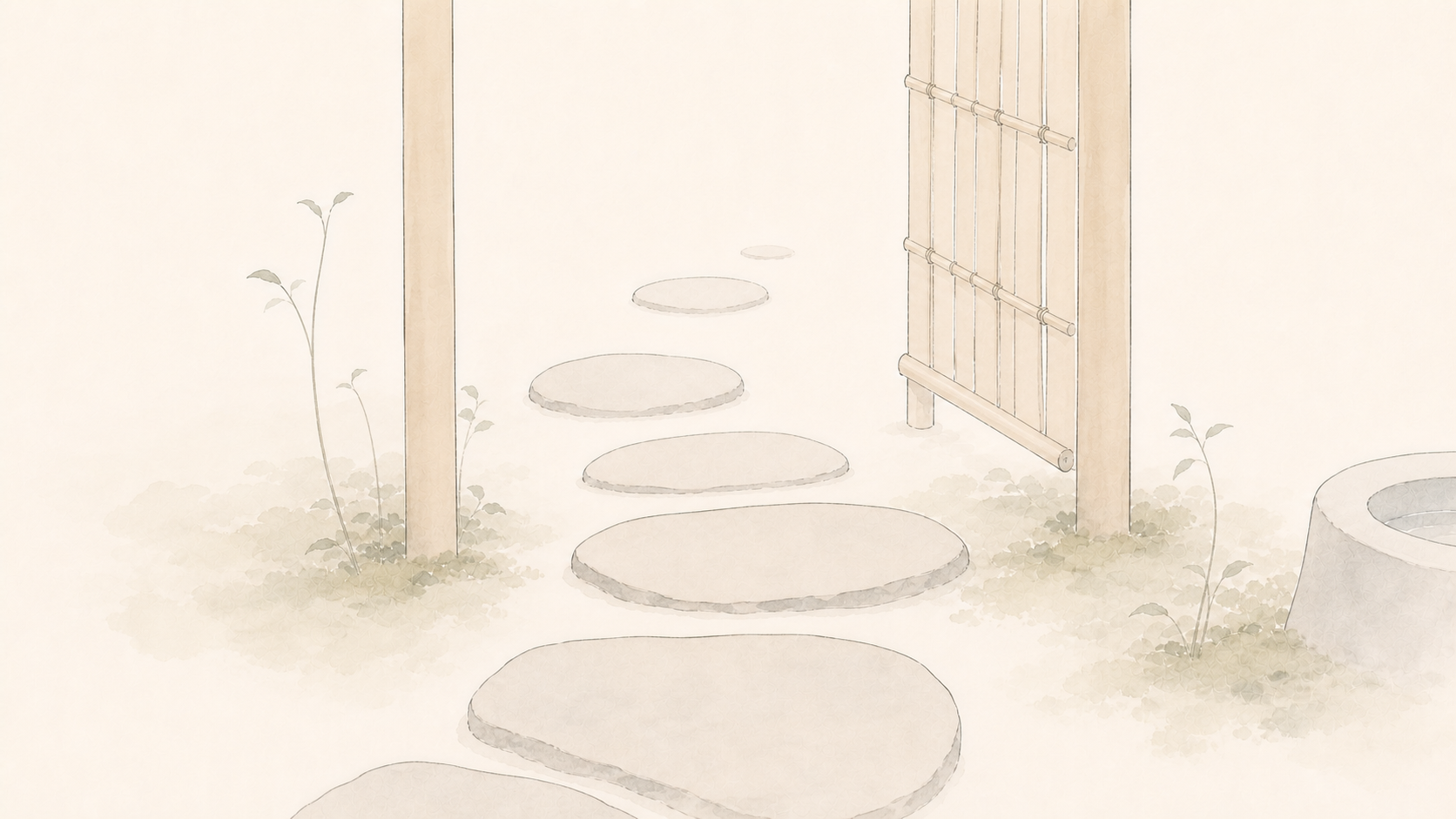
The roji is a garden on the way to the tea room. Walking through it changes the pace of our steps, where we look, what we hear, and how we move. To understand that passage, begin with what a guest does there as well as what there is to see.
The roji is a garden to walk through as well as look at
The tea room is still some way off after the gate. Choose a stepping stone, look down at your feet, and wash your hands at the tsukubai. Over that short distance the pace of the street falls away. The roji works as an anteroom outside the building.
The plants and stones are beautiful, but a single view from the front cannot convey the whole garden. Guests walk, stop, and bend down in it.
The garden asks the body to do something. The walk prepares the attention guests will bring into the tea room.
The work of tending a roji is part of its appearance. Someone sweeps, sprinkles water, and decides how many fallen leaves to leave. Quiet here comes partly from how people respond to natural change, beyond any opposition between natural and artificial. The garden is prepared anew to receive the guests of a particular day. That repeated care is part of its design.
When you next walk through a garden or the entrance to a building, notice both where you will end up and what happens to your senses before you get there.
Stepping stones change the pace and direction of the gaze
When the path shows where to set a foot, people naturally look down. Stride changes, and sounds and dampness in the surroundings come to their attention.
Stepping stones guide more than a path. They shift the pace and gaze of a body that has just come from the street as it prepares to enter the tea room.
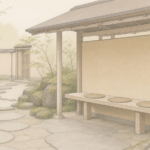
The waiting bench brings a hurried arrival to a stop
A gathering does not start by reaching the destination as quickly as possible. A place to wait gives the guests time to assemble and get ready for the host to come and greet them.
Waiting brings people onto a shared schedule. The roji helps resolve the differences in when they arrived before handing them on to the tea room.
The tsukubai makes cleansing a physical gesture
Reaching water set low changes the guest’s posture. The contact with water and the act of bending together mark a break before entry.
Cold water, sound, and posture make cleansing something a guest feels. The garden turns the idea into a movement.
Natural-looking ground takes care to maintain
Cleaning, planting, and deciding what to do with moss and fallen leaves are ongoing tasks. That care makes the roji feel natural.
A hand has to do the work, even when you hardly notice it. The choice is how much of the work to let show.
A single gate cannot make the change from outside to inside
A guest moves out of daily life over several stages. A gate, a path, a place to wait, water, and an entrance all change what the senses attend to.
Small steps make the passage into a different kind of time feel natural.
Weather and season change the same roji
Rain wets the stones, and sounds seem closer. A dry winter morning and a summer evening give the same path different paces.
Weather and time are part of a roji’s setting for tea. Change in the garden becomes part of what a guest experiences at each gathering.
Passing a gate does not make daily life vanish at once. As guests move from the yoritsuki to the waiting bench and through the garden, they carry less, take different strides, speak more softly, and look down. Stepping stones, the tsukubai, and the inner garden are all part of that gradual passage. One small threshold after another makes the change something the body understands.
The size of each opening, the weight of its door, and the stones underfoot adjust the pace a little at a time.
What can an entrance today learn from the roji?
A lobby or website often aims to supply information as quickly as possible. A roji shows how the passage toward a destination can deepen the experience.
The useful lesson goes beyond imitating a Japanese form. A change of pace can make someone ready to receive what comes next.
Watch what your body does in the garden
See the stones and moss, but also notice where your stride, gaze, or hearing changes. Walking makes the garden’s design more apparent than a photograph can.
What the same path feels like in rain or dry weather, in the morning or evening, is part of the experience. The garden takes in its surroundings and changes with them at each visit.
To use what the roji teaches in a place today, consider how to shift attention in stages from arrival to destination. Stepping stones and a low basin are only two of the forms such a shift can take.
I would read the roji as the first part of a tea gathering, even though it lies outside the building.
The roji changes the way we walk
When I walk a roji, I soon notice what is happening to my way of walking. The spaces between the stones shorten my stride. I lower my body at the tsukubai. Trees hide the way ahead for a time. The body has already left its everyday pace before I stop to admire the garden.
In a public building, a good route is often a quick and clear one. The roji delays arrival and turns that delay into a chance to collect yourself. I see a design that makes moving through space an experience in its own right.
I once walked in a roji just after rain and spent nearly the whole time looking at the way the stones were wet. By the time I went into the tea room, what I had been thinking about in town seemed farther away. A place set up to draw my attention to my feet had brought about that change.
Moss and a stone lantern alone cannot recreate what happens on the walk. Where do the guests wait, what is kept from view, and at what pace do they approach the room? Materials, season, upkeep, and the sequence of the gathering support the passage together. The garden belongs to the gathering from the start.
Consider the pace of someone crossing the stones
Stepping stones in a roji are set with the stride, direction, drainage, outlook, and routes to the bench and basin in mind. In a photograph, I try to imagine someone walking the stones before admiring the arrangement as a composition.
Guests on the route are not looking at a garden they can wander through freely. Even on one path, they choose where to put each foot, notice the rain or leaves, and make the passage in their own way. There is room for individual perception within the sequence.
A smooth route from entry to purchase can make a brand experience more efficient and still leave a weaker memory. A small obstacle can give someone a reason to pause and discover something. The roji suggests how a pause can draw attention instead of merely holding people up.
A contemporary route has its own requirements for safety and access. What can carry over from the roji is the idea of changing the senses in stages along a path, beyond the shape of the stones.
Conclusion
Stepping stones, the waiting place, the tsukubai, gates, and the season gradually change the guest’s stride and attention. The roji prepares a person for one gathering by making the approach itself a part of the design.
The garden has a style, and it also offers a way to follow changing attention. Gates, stones, water, and waiting give the body time to find the pace of a gathering before entry. The walk is already part of the hospitality.
If the light or sound inside feels different after the walk, the roji has already done its work.
 What Modern Design Can Learn from Rikyū’s Tea Rooms
 Following the Stepping Stones: How a Tea Garden Changes Your Stride and Gaze
 The Tsukubai: Water and the Gesture of Lowering the Body
 The Garden Waiting Bench: What Are the Guests Waiting For?