
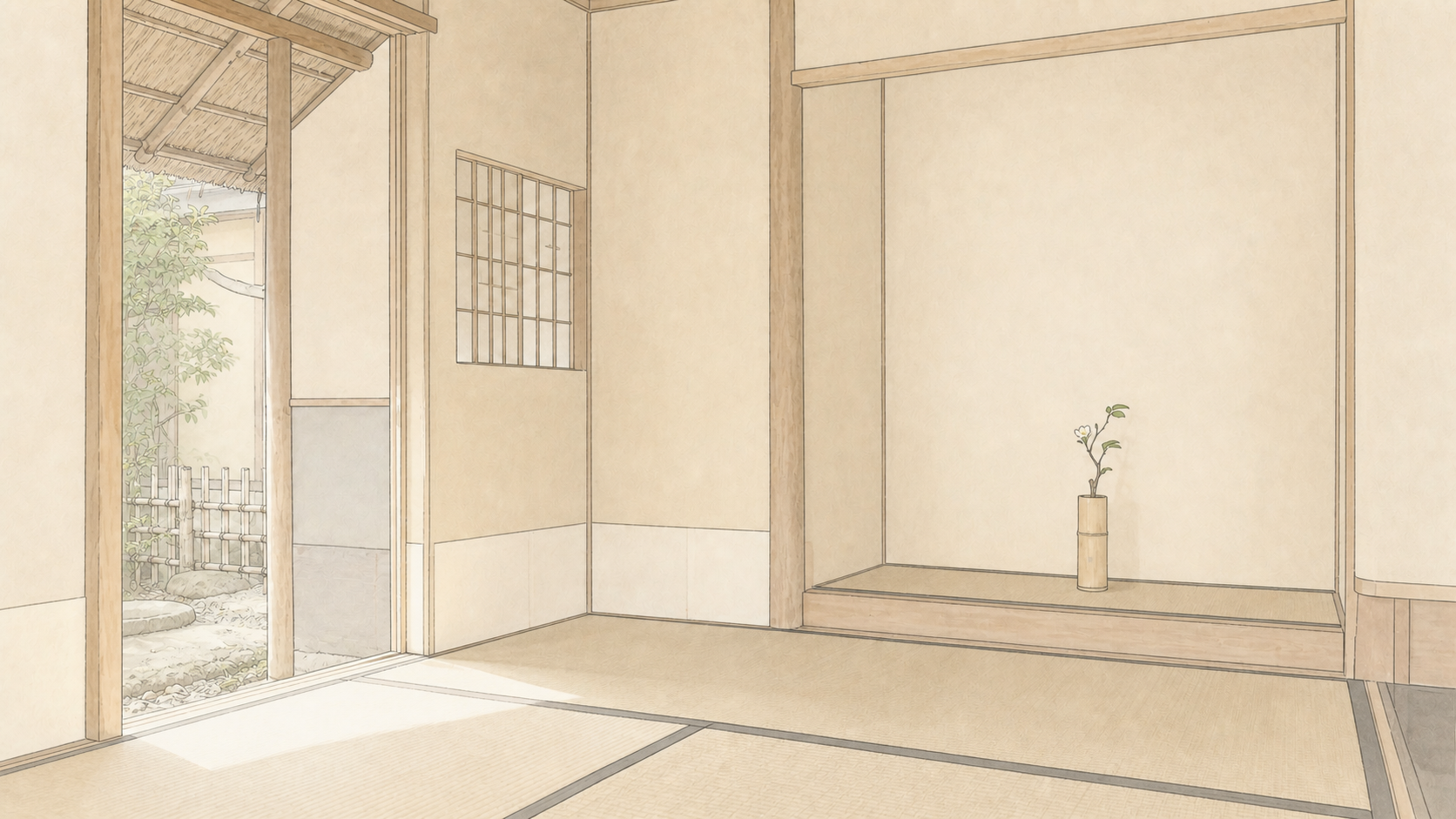
After kaiseki and the main sweet, the guests leave the tea room for a time. Nakadachi is the break between the first sitting and the second, when thick tea is served. What happens to the same room in the short time the guests are outside?
Nakadachi comes between the first and second sittings
In the formal gathering described by Omotesenke, the first charcoal procedure, kaiseki meal, and main sweet belong to the first sitting. The guests then go out to rest on the bench in the inner garden. This is nakadachi, the middle break. After they return, the second sitting proceeds through thick tea, the second charcoal procedure, and thin tea. The pause lets people rest after the meal and marks the transition from its conversation to the concentration of thick tea.
Vacating the room lets the first sitting end and the second begin afresh. The Japanese word nakadachi evokes getting up in the middle. The principal guest leads the other guests out, so even the move to the break happens as a group.
The host changes the room while the guests are outside
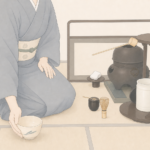
During the break, the host sweeps the room, opens the propped-up window farther, rolls up the hanging scroll, and puts a flower vessel and flowers in the alcove. The host checks the fire and water, sets out the freshwater jar and tea caddy, and prepares for thick tea. Changes to the light, alcove, utensils, fire, and water can give the room another character without changing the walls or mats. A living flower takes the place of a scroll.
The room moves from written words to a plant. The break gives the host time to make a second setting through changes in what is placed where. The shift from reading the scroll to looking at a living plant changes the kind of attention guests bring to the alcove.
Time for the guests to rest and prepare
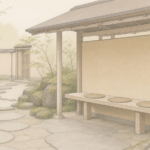
Guests step outside after kaiseki and the main sweet and wait on the bench before returning for thick tea. The fresh air and time seated there let the feeling of the meal settle. Conversation quiets. The sweetness can remain as the guests prepare for the tea. Temperature, light, sound, and posture change as they move outdoors and give the first sitting a physical end.
The break helps the guests attend to what comes next. The main sweet leaves a taste that prepares for thick tea. A pause that runs too long can lose that connection, while a brief pause may give the body little time to settle.
The meal and main sweet leave a taste behind. Time in the fresh air, a change of posture, and a pause in conversation prepare the guests to encounter the flowers and thick tea with fresh attention.
The gong signals the start of the second sitting
When preparations are complete, the host sounds a gong or a small bell. The guests rise at the sound. Heard in the garden, it connects guests and host when they are out of sight and gives everyone the same cue. The guests cleanse their hands and mouths at the tsukubai again and enter for the second sitting.
They may come through the same doorway, but they have already experienced the first sitting and the break. The sound, cleansing, and entrance together give the second sitting a beginning of its own. The manner of sounding the gong is also part of the procedure. The guests receive its cue in the quiet of the garden.
The spaces between strokes and their fading sound carry into the roji. The guests listen for the end and then make their way back to the room.
A pause makes the change visible
If the guests stayed in the room, they could watch the host remove the scroll, sweep, and bring in the flowers and utensils. They would see how the work was done, and the change at the end would be less surprising. Because the guests are away, the difference in light or in the alcove can be apparent as soon as they return.
A design can show the process of a change or let someone encounter the finished result in one moment. Nakadachi makes room for the second approach. The time and place of the work are set apart so the guests can concentrate on the result when they come back.
The scroll gives way to a flower and the light and utensils change position. The break gives the guests enough distance to discover the difference for themselves.
A break gives a long experience two parts
In an exhibition, performance, or meeting, a steady succession of things can leave each with less impact. A break can let the first half settle and bring the second into focus. During nakadachi, the guests rest while the host changes the room. Both prepare for the return in their own way.
Think about what people will encounter when they come back and where you want their attention to go. The pause and the work of making the next scene belong to the same decision. Nakadachi resembles a page break that also changes the light, temperature, and position of the reader’s body.
The break makes the changes to the room easier to see. In a full schedule, a pause can also make room for what needs attention next.
Conclusion: Leaving lets you see the same place afresh
Guests leave to rest in the garden while the host sweeps the empty room, replaces the scroll with a flower, and arranges the light, fire, water, and utensils. The gong sounds. The guests cleanse themselves again and come back through the entrance. Their memory of the first sitting and the short time outside let the same building appear differently.
The first sitting can come to a close so that the guests encounter what is in front of them again. The break is part of preparing to receive thick tea as the focus of the gathering. During the pause, the effects of the first part settle and the guests prepare to attend to the second.
 What Is Sadō? How the Japanese Practice of Tea Designs Relationships
 Reading Tea Records: Reconstructing a Gathering in Words
 The Garden Waiting Bench: What Are the Guests Waiting For?
 The Host’s Work: Bringing Utensils, Fire, Water, and People into a Tea Gathering