
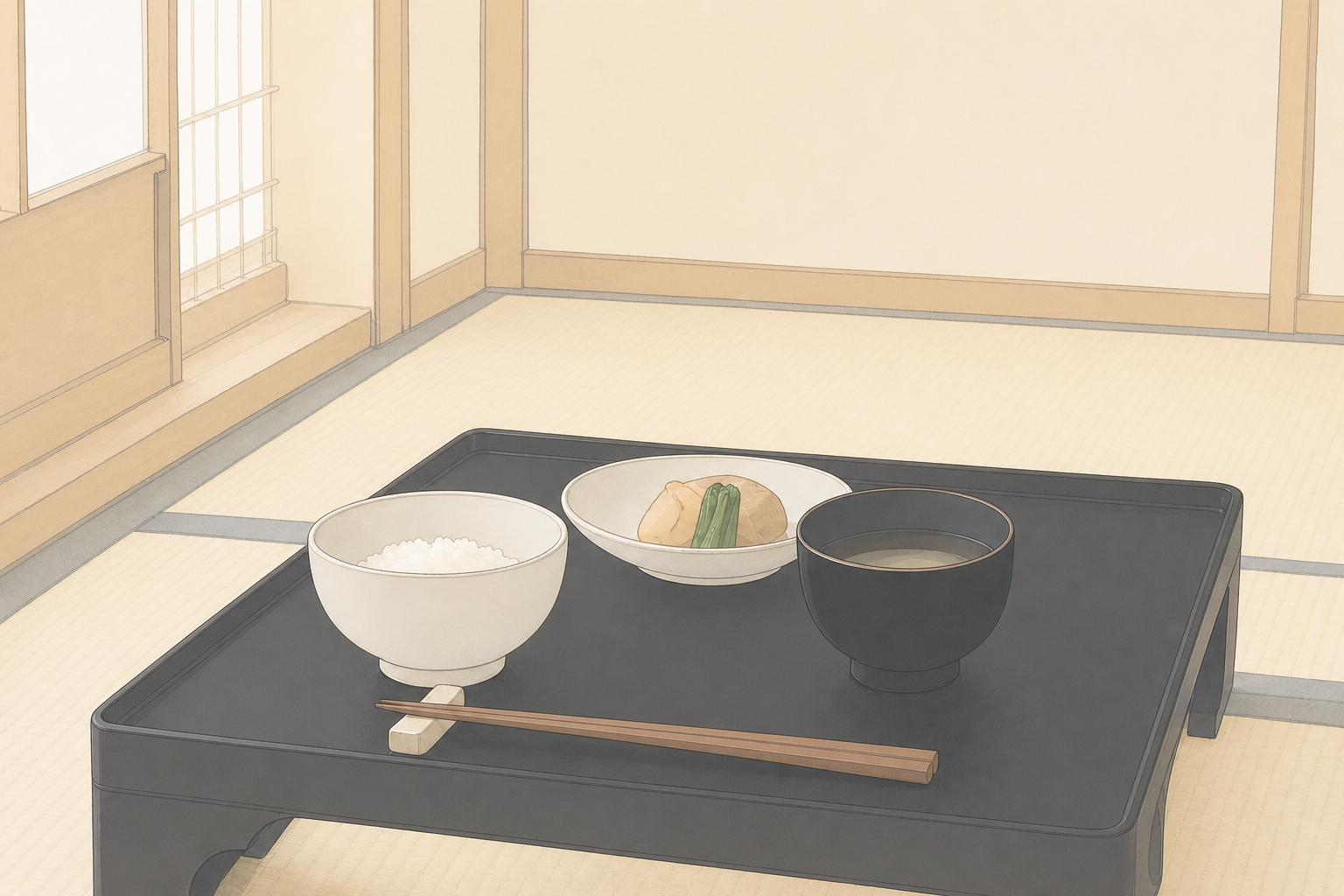
At a formal tea gathering, the guests eat kaiseki before thick tea. The meal warms them, settles the palate and conversation, and leaves them ready to receive a bowl. Its place in the gathering tells us what the food does.
Tea Kaiseki Comes Partway Through the Gathering
A midday chaji generally proceeds from the kaiseki meal to the intermission, or nakadachi, then to thick tea and thin tea. The meal belongs to a sequence that prepares the guests to enjoy the thick tea. They respond to the host, take in the seasonal vessels, and grow accustomed to the pace of the gathering. The end of the meal prepares the beginning of what follows.
A count of courses tells us little about what the meal does in a chaji. Consider where it comes between the entrance and thick tea, and how the guests feel by the time it finishes. A meal in the first part gives people who have just met something to talk about and can settle them into a long gathering. The food has a taste and a place in the relationships and timing of the room.
Tea kaiseki belongs to the course of the gathering, from the greetings in the first half through charcoal, the main sweet, and thick tea. The amount and flavor make more sense when you see that a bowl of tea still lies ahead.
A Portion That Leaves Room for Tea
Thick tea uses a generous amount of matcha and has a strong aroma and a deep flavor. Extreme hunger can make it hard to receive, while a heavy meal can dull the senses. Rice and soup begin warming the body, and small portions follow. The choice of portion leaves something for the later experience. Satisfaction is spread across the gathering.
The amount is worked out with thick tea in mind. It leaves room to notice aromas, sit comfortably, and wait for the next bowl. I see an arrangement that distributes appetite and attention across the gathering. How much of each do you want available at each moment?
The design of the whole gathering gives each dish a suitable portion.
Rice, soup, and the first small side dish can warm the body and ease hunger without filling the guest completely. There is still room for the thick tea.
Serving Hot Food While It Is Still Hot
Temperature is part of hospitality. The people in the mizuya time the rice, soup, and grilled dishes so each reaches the guests in good condition. Beautiful vessels cannot keep the flow going if food is cold or the wait is long. Watching the pace of eating takes both an established sequence and decisions made in the room. Timing completes what cooking has prepared.
Keeping a dish warm calls for coordination between the kitchen and the room. The host can look at how far the guests have progressed, signal the mizuya, and coordinate plating and carrying. Too early and the vessels pile up. Too late and the food cools. The best moment depends on how the guests are doing as much as on the clock.
Temperature gives the guest a sense of how closely the host timed the arrival. Too early can feel rushed, while too late allows the dish to cool. One dish can show how well the two rooms keep pace with each other.
The Vessels Show the Portion and the Season
The depth of a bowl, the space around the first side dish, and the size of a serving bowl for sharing grilled food help set the amount and guide how the guests take it. Seasonal designs and materials convey the weather without words. The same food can feel different and be eaten at a different pace if the vessel changes. Choose the dish and vessel together with the size of a bite, the hands, and the season in mind.
Open space can give the chopsticks somewhere to go, keep soup from spilling, and help a guest see how much to take in one bite. For a shared dish, the form can also help each person see from which side to take their portion. The vessel gives the food an outline and can keep people’s movements from getting in one another’s way. A seasonal design becomes part of the setting on top of that work.
The sizes of bowls, trays, and serving vessels change the space around the food and the speed of eating. A form that fits the amount and temperature gives a dish its place before a seasonal design is added.
Making Room for Conversation Without Letting It Take Over
Sake may accompany the meal and deepen conversation between host and guests. Sharing the food and responding to what the host has prepared can ease tension. The gathering stays warm and sociable while making room for thick tea to follow. The meal brings people closer and the order of the occasion carries that closeness forward.
Sake and talk can make a formal gathering feel intimate. If they go on too long, attention can drift from the thick tea still to come. The host watches both how people are enjoying themselves and when to move on. Ending an enjoyable moment while something of it remains can make the quiet after the intermission feel deeper.
The Main Sweet and the Intermission Mark the Change
After the meal, guests eat the main sweet and go out for the intermission. This separates the time for food from the time for thick tea. The host resets the room while guests refresh their palates and attention. They return to the same room, but the light, scroll, and utensils may make a different impression. The pause makes the change possible. The meal leads quietly to it.
During nakadachi, the guests step outside and the scroll or other utensils can be changed. The fire and hot water are readied. The experience moves into another part even though the guests return to the same place. A few objects and the movement of people can change what the space means. The end of the meal includes handing the guests on to that next moment.
Closing | A Meal That Deepens a Bowl of Tea
The portion eases hunger, the sequence brings warm food in good time, the vessels convey the season, sake can help conversation, and the intermission divides the parts of the gathering. Together they prepare the body and the time for thick tea. Look at what a dish does in the stretch of time before and after it.
The work of the meal carries on after eating. The vessels, the distribution of appetite, and the way one part of the occasion leads into another all matter. Each dish can give something to the one that follows, the main sweet, the intermission, or the thick tea. What people enjoy is spread across the whole gathering.
If the bowl of tea tastes deeper because of what you ate before it, the meal has finished its work.
 What Does a Kettle Tell Us? Listening to the Water in a Tea Gathering
 A Bamboo Ladle for Measuring Water and Marking the Seasons
 The Garden Waiting Bench: What Are the Guests Waiting For?
 Why Do Sweets for Tea Suggest the Season Indirectly?