
Color and shape are only part of what lets a Japanese sweet convey a season. A name, a vessel, the order of serving, and a guest’s memory all help. Begin with what a sweet can suggest without making a little model of the season.
This article looks at mitate and the details a maker leaves out to suggest a season without copying the flower itself. Other articles look more closely at naming sweets and at the roles of main sweets and dry sweets.
A Sweet Can Suggest More Than It Depicts
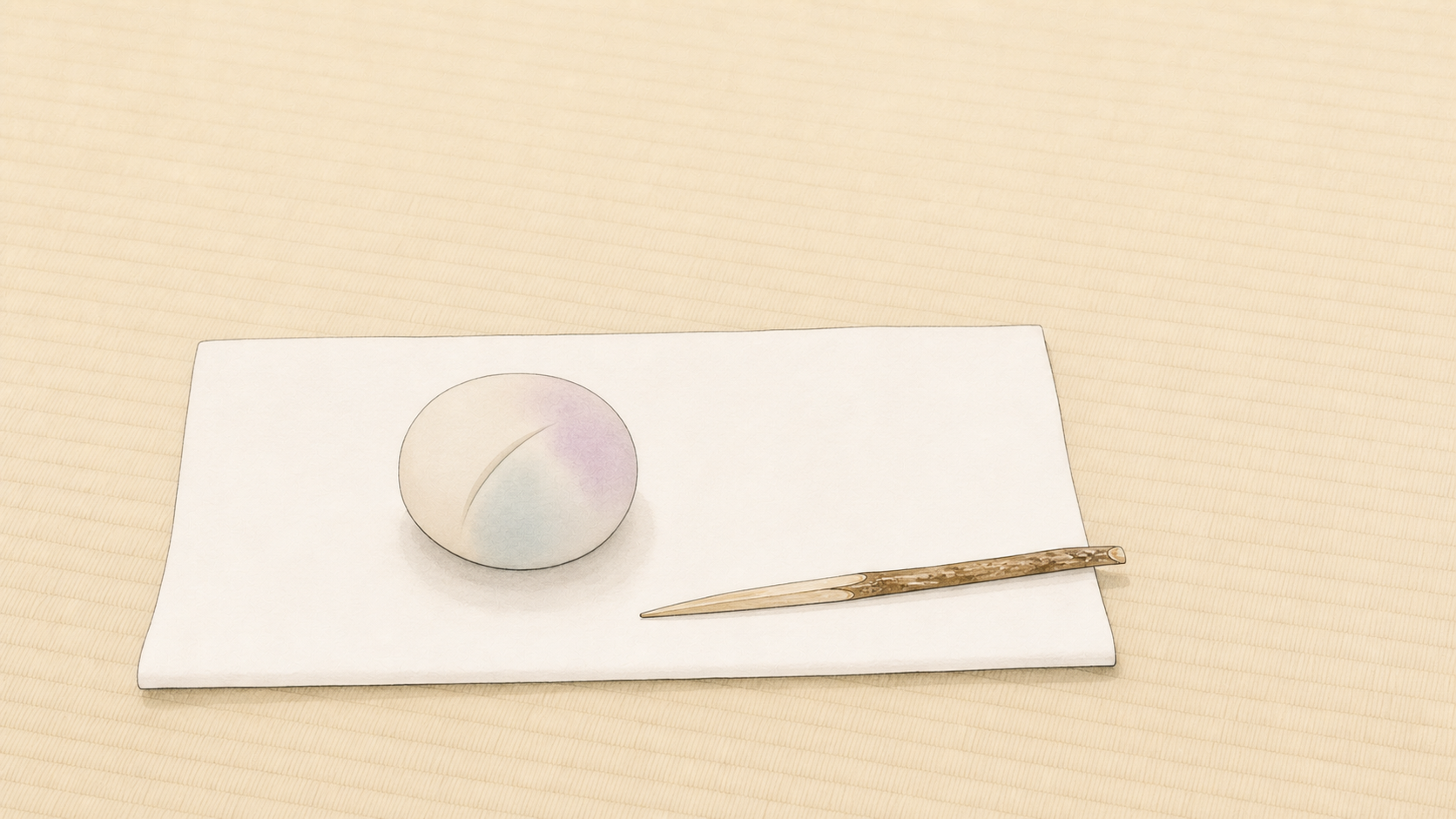
A literal cherry blossom is one way to make a sweet for spring. Pale layers of color or an unfamiliar name can also bring to mind a scene that is not visible. The sweet comes into view only briefly before tea and disappears when eaten. Its color, name, vessel, and taste can stay in memory in the order they appeared.
Some finely made fresh sweets reflect the season through the maker’s handwork. A soft transition of color, a reduced shape, or the grain of an ingredient can suggest a fragment of the season.
Leaving some of the scene undrawn gives the guest’s memory a role. The sweet can make a season come to mind.
A Sweet’s Name Changes What You See Before Tasting
The same shape can look different once you hear its name. A word gives the shape or color a direction and can bring a scene into view in the guest’s mind.
The short name sits between the object and the guest’s memory. It offers a place for an association to begin.
The Vessel and the Tea Change the Sweet’s Role
The color and empty space of the vessel, the order of serving, and the bitterness of the matcha that comes afterward all affect the sweet. The contrast with sweetness brings a different outline to the taste of matcha.
A sweet that works well in a shop may compete with the theme or the vessel in a tea room. Choosing the sweet means finding what it can do among the other things in the gathering.
One Sweet Can Speak in Several Ways
Color, shape, ingredient, name, vessel, and sequence give a sweet several ways to suggest a season or the host’s intentions. At the end it is eaten and disappears.
Because it will disappear, the sensation of having it and the conversation can be vivid. The making of a sweet for tea gives an experience a way to remain in memory.
Materials and Techniques Give the Season Different Textures
Nerikiri, kinton, yam dough, and kuzu starch can give a sweet a different look and a different sensation. How it dissolves, its temperature and moisture, and the softness of its edges can bring out different aspects of the same season.
Spring can appear in a flower shape, in blended color that suggests mist, in loose crumbs that recall new growth, or in a translucent material that suggests water. Technique helps a maker choose which part of the season to bring forward.
The designs and names handed down by a shop, a maker, or a locality have histories of their own. Knowing what has been handed down helps you see how it can work with the theme of a gathering.
What a Sweet Does as It Disappears
There is a sequence: see the sweet, hear its name, take it, cut it, eat it, and then drink tea. A still photograph shows only part of what the sweet does in that sequence.
Sweetness can open up the bitterness and umami of the matcha that follows. Taking a sweet from the dish and waiting for a neighbor are also part of the order of actions and tastes.
Making something that will disappear can seem an inefficient use of time. The guest can carry a memory of how the sweet appeared, was handed around, and disappeared. Its design can give each of those moments a place.
A Season Can Come into Focus Slowly
A cherry blossom in the shape of a cherry blossom is quick to recognize. An experience can deepen when recognition takes longer.
With a transition of color, the texture of grains, or a single word from the name, guests can supply part of the scene themselves. Recognizing it a little later can give them something to remember and talk about.
Leaving something out can give people a role. The same sweet can then suggest different images of a season.
A Vessel Changes How the Sweet Looks
In a white vessel, a pale color can gain a clear edge. A dark lacquered vessel can make the sweet’s brightness stand out. The space around it and the direction in which it faces also affect how it looks.
A showy vessel and a showy sweet can compete. Which one comes forward and which gives the other room? Bringing the pieces together takes a view of how they work in relation.
As you move the sweet to a small individual plate and cut it with a kuromoji pick, something seen at first as a shape becomes a physical experience.
Seeing the Sweet in the Sequence of a Gathering
The sweet is the focus in a shop display. In a tea gathering it is one moment among several. How the sweet tasted changes how the bitterness or aroma of the tea comes through.
A beautiful sweet and a sweet well suited to a particular gathering are not always the same. The choice depends on the guest, time, tea, vessel, and conversation.
Looking at wagashi as design means seeing its form and the whole interval in which it appears, passes from one person to another, disappears, and changes what follows.
Mitate Leaves the Guest a Season to Imagine
A photograph of a sweet with one line or a wash of color can sometimes suggest more beyond its edges than a precise rendition of a flower. I see that difference as a choice about how far the viewer’s imagination can go. A close likeness does not guarantee that the sense of the season will reach a viewer. Leaving something out can give the viewer’s memory a way into what it sees.
The same pale white can take on temperature or light once the guest hears “First Snow” or “Water’s Surface.” The color has stayed the same. I think the change in how it looks shows how neatly a word and a form can work together.
A vague shape alone does not give a sweet grace. What was left out has force when its origin, season, material, vessel, and name belong together. I want to see how far a maker gave something a shape and where they let the guest’s imagination continue. That boundary can show the precision of the choice.
Look at the Scene Before the Sweet Goes Into Your Mouth
When I choose a sweet, I want to see both how well the form holds and how the image changes at the moment of eating. Cutting into the sweet with a pick and taking it to the mouth undo the shape that the photograph retained. The season comes through even in that brief disappearance, something a print cannot convey in the same way.
Closing
A sweet for tea can leave part of a season to the guest’s imagination. Color and form suggest rather than describe it, the name directs the gaze, and the vessel and the tea give the taste an order. The materials, techniques, words, vessel, and sequence can leave an image after the sweet itself is gone.
I understand mitate here as the precise work of leaving room for a guest’s memory while keeping the taste of the ingredients and the feel of the season intact.
Ask which moment of the season its color, outline, and name bring into view. The guest’s memory and that day’s weather can enter through what was left open and make the sweet part of a scene particular to that gathering.
 How a Sweet’s Name Suggests a Scene Before the First Taste
 Main Sweets and Dry Sweets: Sweetness in the Time of Thick and Thin Tea