
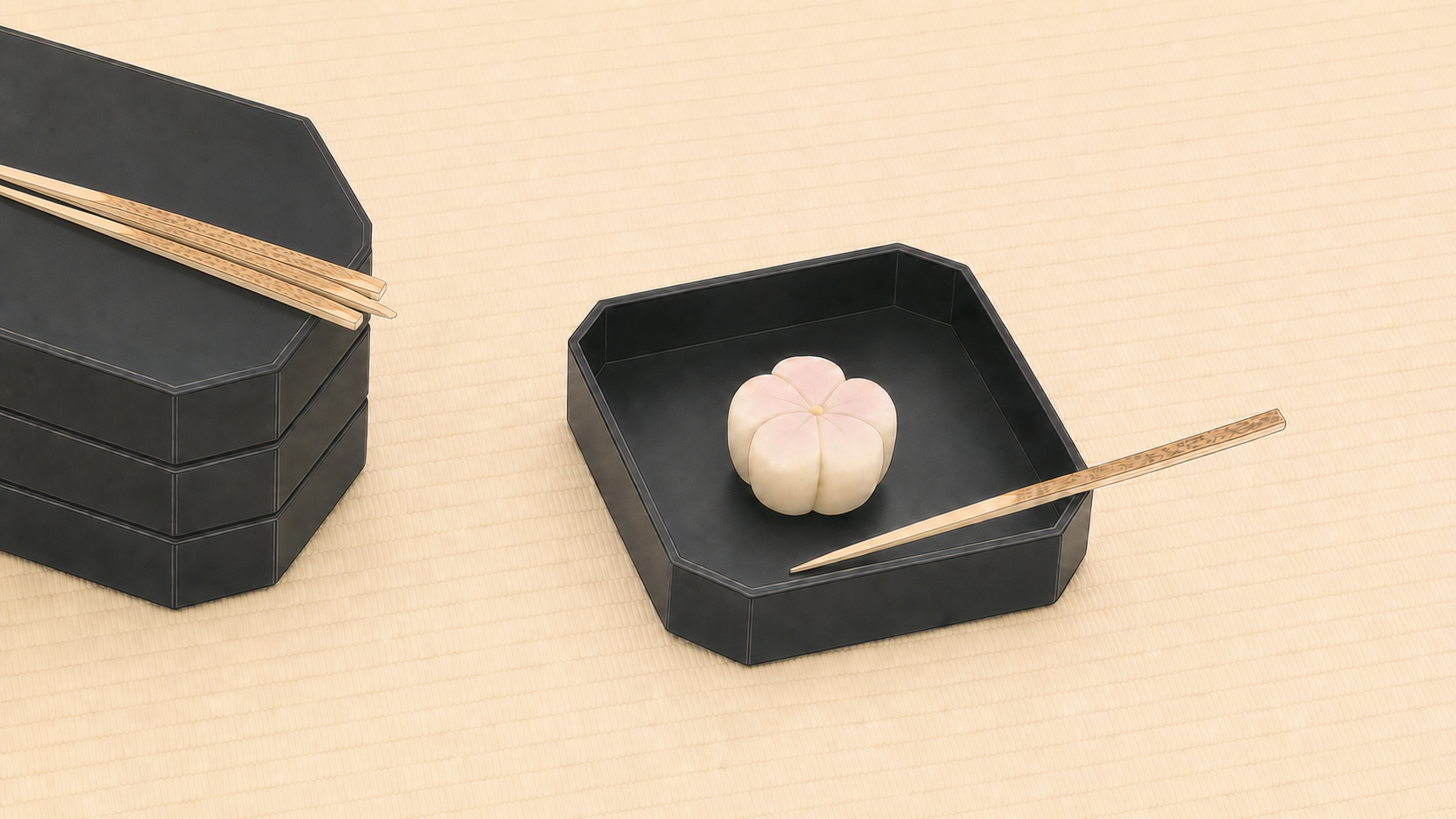
A sweet can look different before and after you hear its name. A few words can connect its shape and color to a season or memory. Begin with what sets a name for a sweet apart from an ordinary product name.
A Sweet’s Name Can Do More Than Identify It
Imagine looking at a pale sweet and hearing the host give its name. With a single word, the soft color can look like mist or light on water. The name lets you see the thing in front of you again.
A kamei identifies the sweet and can evoke a season, an older text, or a scene. It has a use beyond describing the confection.
A single phrase can link cultural memories to what you see and taste.
Color Can Look Different After You Hear the Name
The words leave the color as it was but can change what you notice. A pale white might suggest snow, a wave, or moonlight depending on what the sweet is called.
The name comes after the first look and can change what the guest saw at first.
What the Name Leaves Unsaid Lets Memory In
A long account can pin down what something means. A short name leaves room for a guest to complete the scene from their own experience.
A host or maker has to find the point between leaving a suggestion and leaving the guests with nothing they can recognize. A difficult word does not necessarily bring refinement.
How Poems and Stories Give a Name Depth
Some names echo waka, stories, or the memories attached to a place. Learning that background can open another time behind a few words.
The source and meaning deserve care. The name can give guests a way to follow it back without asking them to admire how much the host knows.
The Shape and the Name Can Say Different Things
Call a cherry-blossom shape “Cherry Blossom” and the meaning is clear. When form and words correspond exactly, there may be little left for the guest to discover.
A shape can show part of a scene while the words open another direction. The distance between them gives the sweet depth.
When a name comes from an old poem or story, finding the source can tell you which part of a scene the name leaves out. The season, time of day, and relationships in a poem can give “moon” or “dew” a different light and feeling. Leave enough of the source for a phrase to resonate with the shape of the sweet.
When the Guest Hears the Name Matters
There is more time to imagine a scene if a guest asks for the name after looking. Hearing it right away gives the imagination less time alone with the shape.
The effect of the same word depends on when it arrives and in whose voice. The name comes into its own in the exchange.
One Season Can Hold Several Pictures
Seasonal words can feel different in different places and times. A single name can leave room for more than one association.
The name can give a guest a direction for thinking about the season.
If you use the name of a sweet as an article heading, check its source as well as how it sounds. Explain the connection to shape and season and leave some room for the reader. Care with the source and an afterimage can coexist.
Look at the same sweet with several people and compare your first impressions. One person might see snow and another the moon. Learning the name leaves those first pictures intact as part of what the guest saw.
What a Sweet’s Name Shares with Copywriting
Few words can reveal something behind an object and enlist the memory of the person looking. In that sense the name of a sweet and copywriting do similar things.
A word from an old text has to make sense in relation to the object, the season, and the room. Its job is to let the guest see more in the sweet.
Compare What You See Before and After the Name
Look first without the name and remember what you noticed. Then hear the name and see where the color or shape looks different. The difference shows what the name has done.
If the name draws on an old text or a memory of a place, look it up. See what the new knowledge adds to the associations that were there at first.
The choice is which word to place at which moment so that the sweet, the season, the gathering, and the guest’s memory can meet.
How a Name Suggests a Scene Before the First Taste
The color may look different on hearing the name, even though the physical color stays the same. “Thin Ice,” “Mountain Path,” or “First Wild Geese” can bring light, distance, or sound to the shape in front of you. I think this is close to what happens when good copy changes how an object is seen.
Advertising copy can guide where people look and let them discover a quality they had not noticed. A sweet’s name can likewise give the guest a path from the form to a memory.
Beautiful old words can become decoration if the season, design, material, source, and gathering have no relation to them. I want to see what kind of scene the words open for the guests who are there that day.
Try receiving the shape and taste before the name, then finding the words and noticing what changes. That interval is where the name works. The words and the sweet can show something beyond what either gives on its own.
Compare Your Impressions Before and After Hearing the Name
Knowing the name first can pull you too strongly toward one scene. Look at the shape and color, see what picture comes to you, and then hear the name. The difference between the maker’s words and what you first saw can give you something new to notice.
A name may bring with it a poem, story, place, or memory of a tea practitioner. A personal impression can be deepened by finding out what people have understood the words to refer to. Both ways of looking can remain in play.
What interests me is what a short phrase can set off in a person’s imagination. Its force comes from attending to what the shape, ingredients, and season already convey and taking the guest one step beyond. The words can change the direction of attention because the sweet is already doing some of the work.
Closing
With only a few words, a name shows color and form from another angle and connects a sweet with a classic text, a season, or a guest’s memory. The name leaves the person looking some of the scene to complete.
There can be a long cultural memory behind a short name. It is possible to give it its due and keep hold of what you noticed yourself.
See the shape and color, hear the name, and look at the sweet again once you know something of the background. The movements between looking and learning let the taste hold some of the season and memory. Notice what the shortest names leave out.
 Why Do Sweets for Tea Suggest the Season Indirectly?
 Main Sweets and Dry Sweets: Sweetness in the Time of Thick and Thin Tea