
Choosing matcha begins with how you will prepare it, when you will drink it, and who will share it. The way it is made and where it comes from matter, alongside color, aroma, freshness, and how you keep it. Start with the leaves, called tencha, that are ground to make matcha.
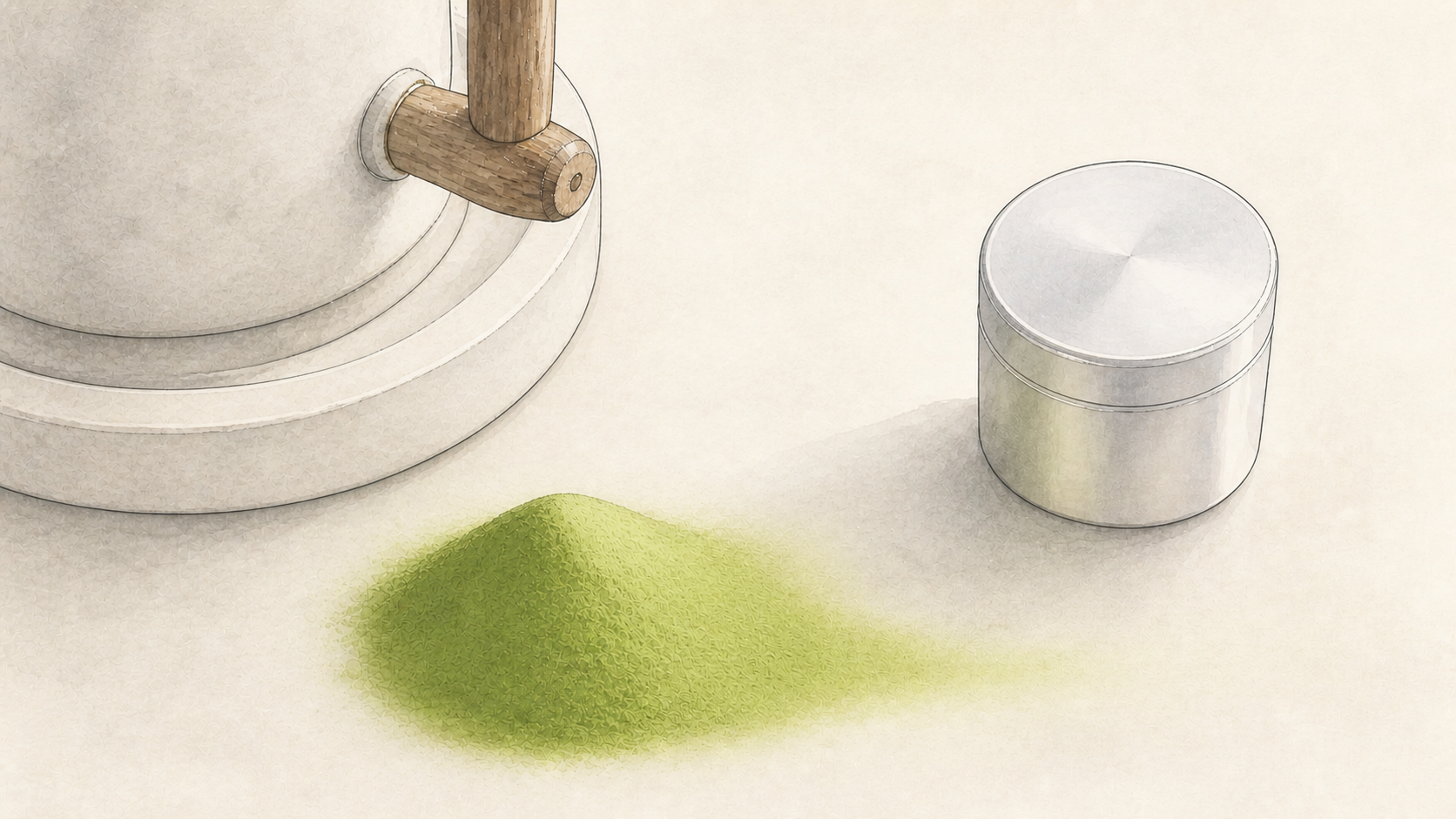
Matcha is made by grinding tencha on a stone mill
A price tag alone tells you little about which matcha to choose. First decide whether you are making thick or thin tea, when you will drink it, and with whom. Its value takes shape in the scent as the tin opens, the color when the powder meets water, and the umami that stays in the mouth, as well as in the company.
Urasenke explains that matcha for koicha and usucha is made by the same process of grinding on a stone mill. The main differences lie in the amount of tea and how it is prepared.
Koicha uses more matcha, worked with hot water into a thick tea. Usucha is prepared by whisking matcha and hot water. Knowing the intended use puts the price into context.
Price is one guide to quality
Region, cultivar, growing conditions, picking, the finishing of the tencha, grinding, brand, and supply can all affect the price. In chanoyu, the tea’s name, the merchant that packed it, and whether it suits thick tea are also meaningful.
An expensive tea can be used for usucha. What suits a cup at home, a lesson, or a formal gathering can differ. Judge what the tea offers in relation to what the occasion calls for.
Look at color and aroma before relying on numbers
Vivid green alone is no absolute measure, but a dull color or muted aroma can offer clues about storage. Consider the scent when you add water, the umami and astringency on the tongue, and the aftertaste together.
Compare small servings and remember how each suited your purpose. Your own experience tells you more than the words on a package.
Storage is part of how a serving of matcha takes shape
Matcha is a fine powder easily affected by air, light, moisture, and odors. Buying a larger amount at a lower price makes little sense if the powder loses freshness before you finish it.
Estimate what you need, seal the container after opening, and watch for condensation when the temperature changes. Buying the tea is only the beginning. The way you keep it through to the last serving affects its quality.
The name, packer, and growing region belong to the story of the flavor
When choosing matcha in chanoyu, its name and packer, the grand master whose preference it reflects, and whether it will be used for koicha or usucha all help put it in context. These details locate the tea in a practice instead of merely lending it authority.
Region, cultivation, cultivar, blending, and finishing affect aroma and taste. To understand differences in price, look at the materials and work behind a tea and the use for which it was prepared. A single ranking cannot tell you that.
A newcomer does not need to distinguish all of those things. Tell a trusted tea seller how much you need and what you will use it for, then taste a few small amounts side by side. Knowledge can help connect a sensation with a word.
Matcha keeps changing until the moment you drink it
Light, oxygen, moisture, temperature, and nearby smells affect the powder. The same tea can make a different impression depending on how long the container has been open and how it was handled. What it was like at purchase is only part of its quality.
The temperature and amount of water, the movement of the whisk, and the shape of the bowl all change the aroma and mouthfeel. The quality of the tea matters, and several conditions together shape what ends up in the bowl.
The same principle applies to a brand. Good ingredients and a strong history alone cannot complete the experience. What the recipient actually touches at the end has to be taken care of for those things to matter.
Respect an expensive tea without letting the price decide
Fine ingredients, careful work, the tea’s name, and its provenance all matter. Treating a cheaper tea as equivalent simply because you happen to like it can overlook the work each one took.
Treat price as a score for flavor and it is easy to miss the use and the freshness. A formal bowl of thick tea and everyday thin tea call for different tea and different amounts.
Standing and usefulness can both enter the decision. A tea chosen well has a setting in which its qualities can come through.
Finding words for color, aroma, and flavor
“Bright,” “sweet,” and “bitter” tell you only so much. Your own words, such as a green scent, an umami reminiscent of nori, or an astringency that lingers, help make the comparison more precise.
Start by preparing small servings under the same conditions and noticing the differences. Using technical vocabulary correctly can come later. Going between sensation and words gives you ways to choose beyond the price tag.
Knowing more about chanoyu can sharpen what you sense. The background gives your observations something to go on.
The final steps determine how the tea reaches the guest
Even excellent matcha will lose its original character if it sits open for a long time and takes up moisture or odors.
Measure the powder, get the water ready, whisk the tea, and serve it. The last steps between supplying the tea and offering it to someone turn the raw material into an experience.
Telling a brand’s history is only one part of communicating its value. Matcha shows why care in the way it is handled has to continue until someone receives it.
Thinking about price through flavor and use
A price can give some indication of the leaves, the work of cultivation and processing, the growing region, and the name under which it is sold. That number alone cannot tell you how you will want to drink it. Will you make a thick tea for its depth, prepare thin tea every day, or serve it with a sweet? What matters changes with the purpose.
Matcha is still being shaped when you open the tin. Storage, the amount of tea, the temperature of the water, how you whisk it, and the choice of sweet and bowl affect aroma and texture. Poor handling can hide what makes an expensive tea good. A reasonably priced matcha can be satisfying when it suits the way you will use it.
From a design perspective, taste takes shape all the way from the leaves to the guest. Storage, measuring, hot water, the bowl, and the hand using the whisk are points where a person or material meets another and changes what happens. Sealing the tin, taking a scoop, choosing the water temperature, and moving the whisk each affect the person drinking the tea.
Before ranking prices, think about the occasion, the company, and how you will make the tea. A good choice matches what the tea does well to the time you will spend drinking it.
Conclusion
Prices reflect a combination of production, region, name, intended use, and freshness. Will it be thick or thin tea, when and with whom, and how much can you use while it is still fresh? Choosing matcha means arranging the conditions that will lead to a good serving.
Price is a useful clue. The name, origin, use, freshness, and preparation together allow the work behind the tea to reach the bowl.
Decide first how you will prepare it and how soon you will use it after opening. Compare color, aroma, bitterness, astringency, and the finish under similar conditions. Then ask whether the differences are worth paying for in the way you intend to drink it. Freshness and the ability to finish the tin while it is good can matter more than a higher price.
 Choosing a Chasen: What Changes with the Number of Tines?
 Why Does Each Guest Get a Bowl of Usucha? Thin Tea and the Pace of Conversation