
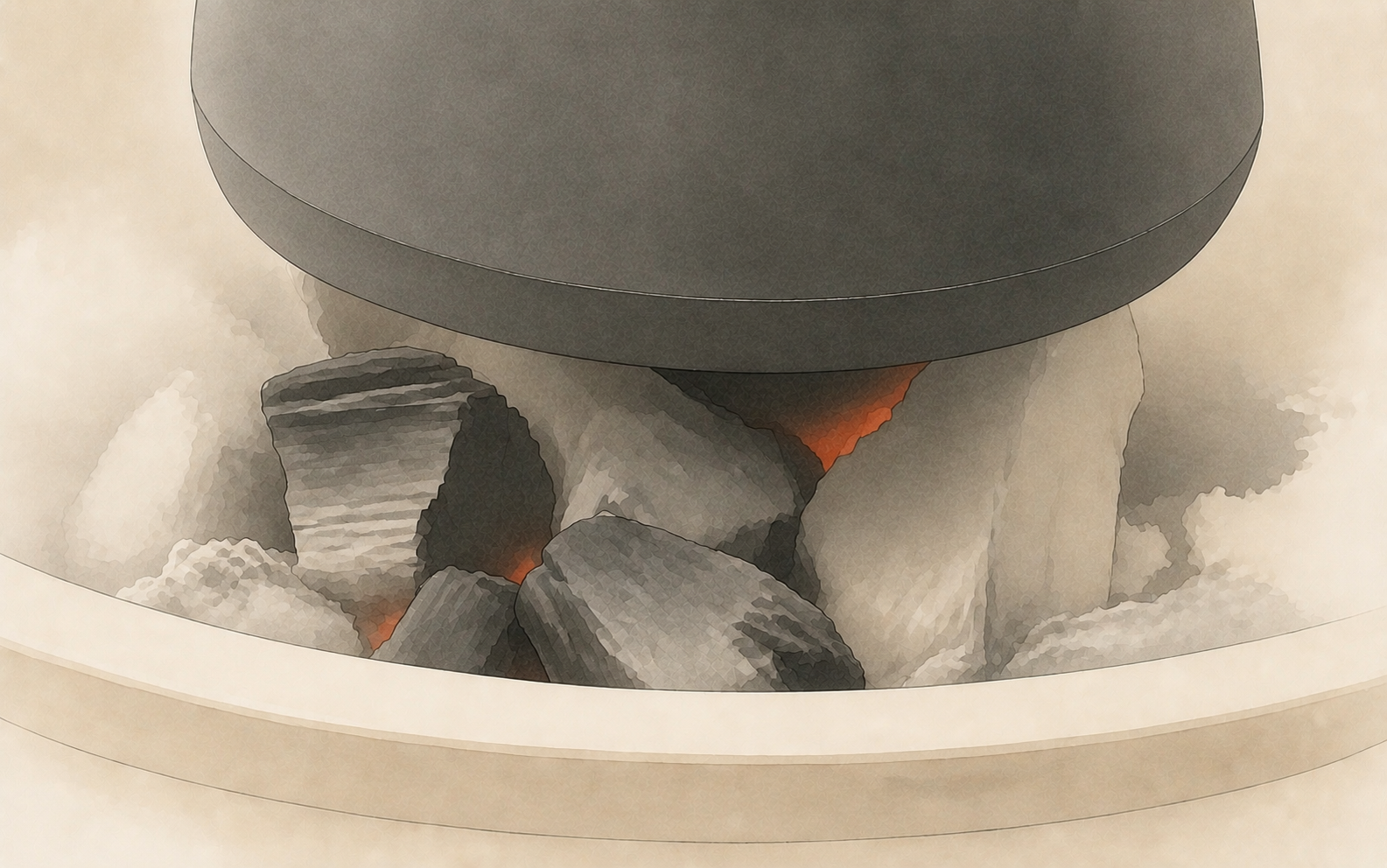
Sumi-demae is the handling of charcoal in a tea gathering. Tending the fire sets the water and the pace for the bowl of tea that follows. It starts with what happens down in the hearth.
Tending the Fire for Tea
A photograph may show the bowl while leaving the charcoal out of the frame. But without the fire there is no hot water. When I watch sumi-demae, I think about the preparation that gives a gathering its pace before the bowl ever arrives. The host builds the fire as the gathering progresses. What happens in the hearth now determines how the water will be later.
In sumi-demae the host handles charcoal to tend the fire under the kettle. The exact steps, the arrangement of the charcoal, and the differences between hearth and brazier are taught in the practice of each school.
Here we look at what that preparation does: it gets the fire going and gives it time to heat water for the tea.
The Fire Takes Time to Respond
It takes time for the fire to catch, the kettle to warm, and the water to heat after the charcoal is laid.
That delay is what interests me. Because the result will come later, the host has to think ahead to the needs of the whole gathering.
Why the Charcoal Is Shaped and Placed as It Is
The pieces of charcoal have particular sizes and roles. Their order in the hearth is deliberate, even when the fire looks unassuming.
Incense Gives the Fire Another Way to Mark Time
Incense is part of sumi-demae. As the fire is tended, its fragrance makes itself felt. The heat and the scent reach the guests by different routes.
One gesture prepares the hot water and the memory of a fragrance. The practical work is part of what makes the gathering worth remembering.
The Bed of Ash Beneath the Fire
The condition of the ash affects both the fire and the look of the hearth. Under the still surface, heat and air move.
I want to see the work and repetition that go into a finished ash pattern. The ground beneath the fire takes preparation every time.
The Guests Share in the Preparation
Guests watching sumi-demae share in the time it takes to tend the fire and kettle and let the fragrance come through, even before the tea is served.
When the host brings part of the preparatory work into view, the preparation itself becomes part of the experience.
The ash bed supports the charcoal at a particular height and helps shape the path of the air. Grain size, moisture, and the way the ash is banked can change where pieces make contact and how quickly they burn. Arranging the surface and making a place for the fire to work are part of the same task.
A line in the ash can show something about where the air and fire will go.
How a Host Works Ahead of Time
The host tends the fire for a later moment. The charcoal and air available now determine how hot the water will be in a while and how much heat will still be available when it is time to make tea. Because the effects take time, the host works back from the moment the water will be needed.
Planning ahead also leaves room to respond. The charcoal, ash, water, and air in the room keep changing. The host sets up the conditions and can make further decisions as the fire develops.
In creative work, the moment a result appears is only part of the job. You prepare people, materials, and time so they come together when needed. Sumi-demae starts from the bowl that will be served later and works back to the fire as it is now. I see a way of directing work that can accommodate both planning and response. When I enjoy a bowl of tea, I can trace it back through the condition of the water, the kettle, the fire, and the charcoal. It depends on decisions made well before the last movement.
Watching the Charcoal Heat the Water
The fire looks different just after the charcoal is laid and the water sounds different by the time the host makes tea. Watch the surface of the charcoal change, follow the heat into the kettle, and notice how steam and sound build. Sumi-demae and the bowl of tea are part of one sequence.
The ash supports that process from below. It gives the charcoal a place to sit, guides some of the airflow, affects how the fire settles, and catches what remains after burning. Charcoal, ash, kettle, and water together show how the host prepares the water for later.
Sources give us names, measurements, origins, and procedures for sumi-demae. After checking those details, I ask what the procedures do to the pace of a hand or the distance between people. Historical evidence and editorial interpretation each have their place. Together they show how a practice has accommodated the objects, people, seasons, and time around it, and give us something to look for in daily life.
Seeing the Work That Comes Before the Tea
At the instant a bowl of tea is served, the hot water is already there. Its temperature and amount depend on a stretch of time in which the host chose the charcoal, prepared the ash, set the fire going, and put the kettle in place. The bowl carries the result of decisions made before the tea came into view.
Preparation gives a later result its quality through work done now. Sumi-demae lets guests share some of that time. Hospitality can start far enough ahead to imagine when a guest will need something and give the fire and water time to be ready.
Follow the next bowl of tea back to the fire. Start with the taste and the bowl, then move through water, kettle, fire, charcoal, and ash. The finished tea has been taking shape longer than it seems.
Following that preparation brings the work that supports the visible beauty of chanoyu into view.
Labels like “Japanese” and “minimal” can cover up the details. Look first at marks on the materials, places where the hand makes contact, the space around each object, and the sequence of movements.
Conclusion
In sumi-demae the host tends the fire, brings the kettle and water along, adds fragrance, and gives the tea that follows time to be ready. Each school has its own way of laying the charcoal. What interests me here is how the fire, ash, charcoal, and guests’ time fit together. The bowl to come is a way to understand the work done long before it is served.
Look beyond the shape of the charcoal to the ash, the air, the position of the kettle, and the time it takes for the water to heat. The guests share the preparations that keep hot water ready for the thick tea later in the gathering. The charcoal comes first so the fire has time to do its work.