
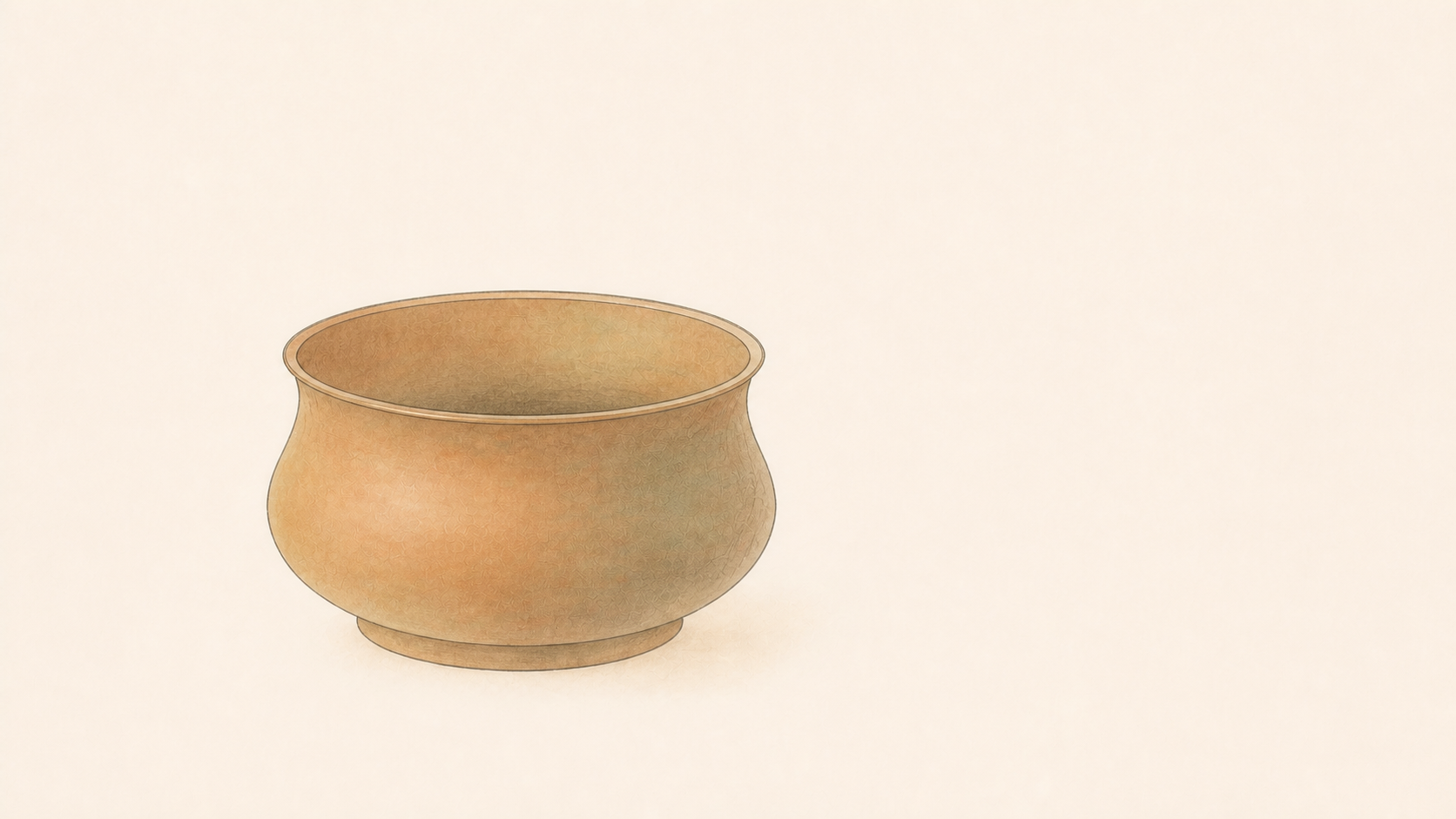
The kensui catches the water used to rinse the tea bowl. What looks like a modest vessel off to one side has a part in keeping the gathering in order. Start by following where the used water goes.
The Kensui Receives Used Water
When making a picture of a tea gathering, I would think twice before removing the kensui. A beautiful bowl and tea caddy may make a tidy composition, but the scene would show less of how temae works. The kensui receives used water. From its place at the side, it gives each rinsing action somewhere to end.
The kensui receives the water used to rinse the tea bowl, among other things. This quiet job makes it possible to repeat the sequence of rinsing and wiping.
I see practical intelligence in making a place for the water after it is used, as well as setting out clean things for the guest.
Keeping a Low Profile in the Guest’s View
The kensui has a necessary place in temae. Its position, height, and color can keep it from drawing too much of the guest’s attention.
Being unobtrusive is part of its role. A design can give objects different degrees of attention without relying on decoration to mark a hierarchy.
Rinsing Requires Somewhere for the Water to Go
A picture of cleanliness alone can put dirt and used water out of sight. In practice, cleaning depends on being able to move what needs to be removed and collect it somewhere.
I see something similar in the design of an organization or service. Work taking place out of sight sustains what people experience publicly. Without attention to that work, the quality they see will be hard to maintain.
Material and Shape Affect How It Handles
Kensui can be made of metal, ceramic, or bentwood, with different shapes and mouth widths. It has to receive water, be carried, and sit among the other utensils. All of that matters when choosing one.
Alongside formality, taste, and the needs of the particular temae, I look at what the hand can do easily. Seen in use, the vessel begins to look less plain.
Keeping the Work in View
An aesthetic that hides support equipment can also make work invisible. The presence of the kensui reminds us that someone carries, empties, and washes it so a guest can receive a bowl of tea.
I want to see the repeated work that keeps chanoyu quiet, rather than make that quiet seem effortless.
Where the Kensui Belongs in an Image
Different schools and different forms of temae place and handle the kensui differently. Setting it next to the tea bowl solely for a still life can give the wrong idea of the arrangement.
When the correct placement is uncertain, an image can show the material and form of the vessel on its own, or frame it so that it makes no claim about where it sits in a formal layout. Getting the cultural details right comes first.
What We Owe to the Work Kept Out of Sight
The kensui takes the water that has served its purpose. That means receiving it reliably and keeping it separate from the next action, so the host can go on with the next rinse. It gives used water a place where it can be dealt with.
Keeping something out of sight still means taking care of it. The kensui stays out of the guests’ main line of sight while remaining within the host’s reach. It has to sit steadily when water is poured into it and be easy to carry away. Its unobtrusive position helps it do a necessary job.
Removing something from view can amount to concealment if you have made no plan for where it goes. The kensui receives the water so the host can take it away. The design becomes clearer when we see the whole cycle: the vessel gains weight, is carried out, is washed, and is made ready for the next gathering.
Following the Position and Movement of the Kensui
Along with the bowl and whisk, follow where the water comes from and where it goes. The kensui comes into view. Each time the host has used water to pour away, the hand moves in the same direction. That short path helps keep things clean, lets the host move comfortably, and prevents the utensils from getting in one another’s way.
Shape and materials affect that movement. The mouth has to be wide enough, the weight easy to handle, and the vessel able to receive water without excessive sound or splashing. Different examples handle differently, but how one looks in profile is only part of choosing it. Consider what it does during and after use.
Sources can give us names, dimensions, origins, and rules for the kensui. After checking those facts, I ask what the rules do to the speed of a hand or the distance between people. Historical details and editorial interpretation each have their place. Together they can help us see how a form or practice fits the objects, people, seasons, and time around it, and give us something to notice in daily life.
The Work That Goes Unnoticed
A tea gathering feels clean because washing, emptying, wiping, and carrying away happen in an order that does not interrupt the guests. The kensui is a real vessel for part of that work.
When arranging a space, think about when something will need to be removed, who will take it, and which way it will go. It helps keep things calm where people can see them. The kensui shows how much care goes into giving unseen work a vessel and a place.
The next time you watch temae, follow the route the water takes as well as that of the bowl or scoop. The gestures become a series of actions through which materials pass.
Paying attention to the kensui means seeing the whole gathering, including the work that usually stays behind the scenes.
Labels like “Japanese” and “minimal” can cover up the things worth noticing. Start with the marks on the material, the places the hand touches, the space around the vessel, and the order in which it moves.
Conclusion
The kensui catches used water and lets the host continue rinsing while the gathering stays in order. Its material, formality, position, and care all matter. I see an obligation in its design: it takes care of what the guests need not see.
Used water has its own route, separate from the next clean action. The shape and position of the kensui keep it within the host’s reach and away from the center of the guests’ attention. That is how a utensil at the side can support the whole arrangement.
A utensil that is easy to overlook often shows its purpose most clearly when the movement it supports is interrupted.