
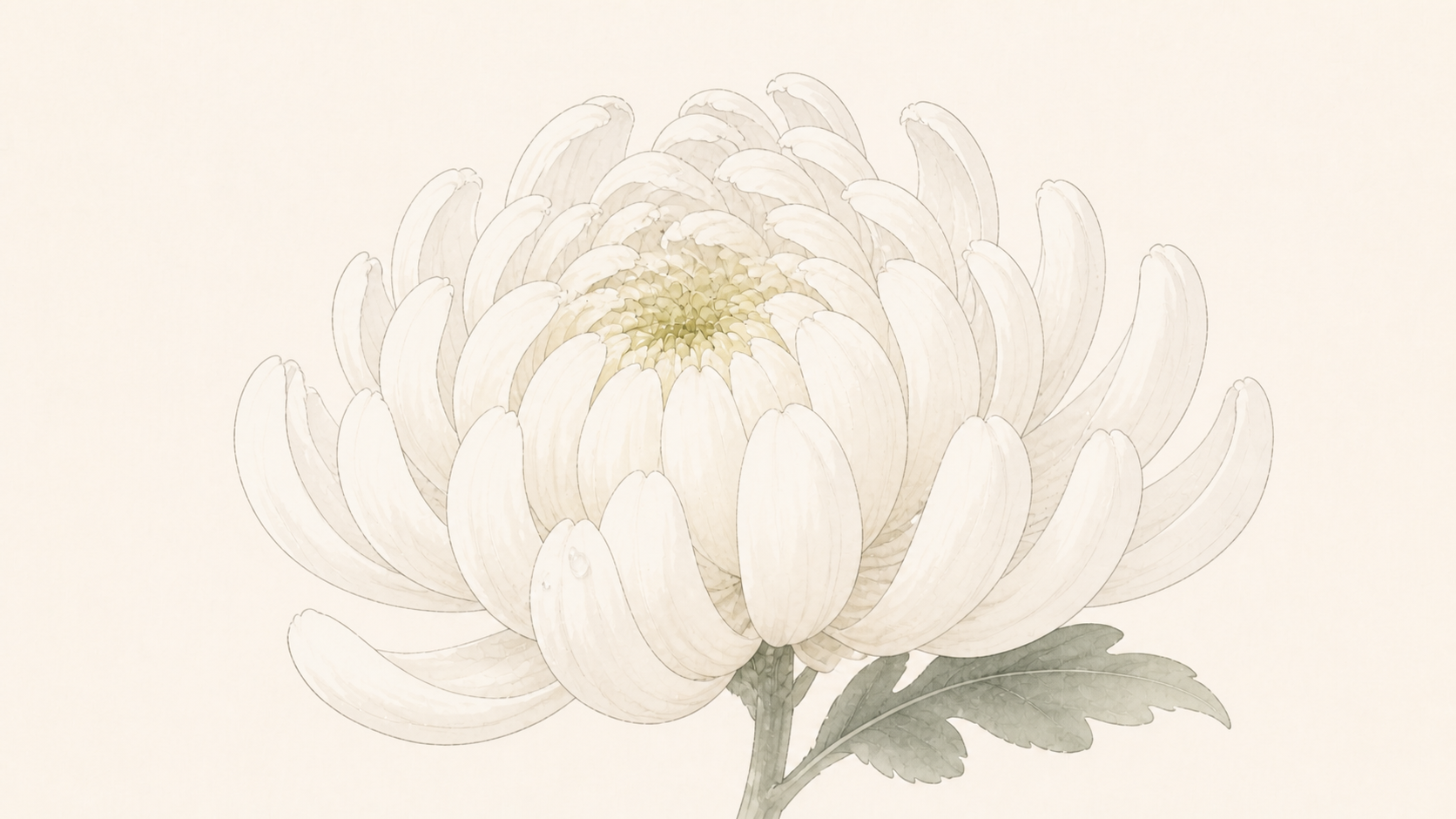
Chōyō, the Double Ninth Festival on the ninth day of the ninth month, brings two yang numbers together. Chrysanthemum, dew, floss, sake, and sweets can each carry a part of the occasion into the tea room. How can a gathering convey a wish for long life without repeating the same chrysanthemum design?
Why Is Chōyō on the Ninth Day of the Ninth Month?
Odd numbers were once regarded as yang numbers. When nine, the largest single-digit odd number, occurs twice on the ninth day of the ninth month, the occasion is called Chōyō. It is one of Japan’s five seasonal festivals and is also called the Chrysanthemum Festival. Less prominent in daily life today than Tango no Sekku or Tanabata, it has ties to court culture and has endured as an autumn occasion for wishing for long life.
A tea gathering can do more with Chōyō than recreate an old observance. In September, the strong light of summer starts to soften and the morning and evening air changes. The form and scent of a chrysanthemum give a presence to a seasonal boundary that is hard to see. The calendar can help the body notice.
Because the Double Ninth is less familiar today than the Doll Festival or Tango no Sekku, repeating a chrysanthemum motif to announce the date can tell a guest only so much. Look at how long the flower takes to open, how it smells, and how it receives dew. The wish for long life can be brought back to the time of a living flower.
Chrysanthemums and Long Life
Chrysanthemums entered Chinese stories and Japanese court observances as flowers associated with long life. People drank chrysanthemum sake and admired the flowers, finding signs of vitality in their fragrance or dew. In the tea room, the flower can appear in a blossom, the shape of a sweet, a design in maki-e or underglaze blue, or the name given to an object.
Knowing that a chrysanthemum design stands for long life is a start. Notice the petals opening evenly from the center, the color that stays strong into autumn, and the faint scent. Some of what people have seen in the flower comes from properties you can notice for yourself.
A wish for long life can also be a wish to stay well while seasons pass and things change. A bud or a slightly leaning stalk alongside an open flower can show the plant in the course of maturing.
The flower’s persistence and beliefs about its healing properties both helped make it a symbol of long life. In the September light, see how far a flower has opened and where a drop of dew can rest. The festival offers a reason to look at the season.
Chrysanthemums Under Silk Floss
An old custom called kiku no kisewata covers a chrysanthemum with floss on the eve of Chōyō. In the morning the floss, now carrying dew and fragrance, is used to wipe the body with a wish for long life. The silk floss hides some of the flower’s outline. Color peeks out from underneath the white, a different sight from a bloom on open display.
Dew disappears quickly, and the floss gives people a way to lift it from the flower. They take into their own bodies something of the water and scent gathered overnight. Tea also lets people drink, catch a scent, and remember a texture. Both practices make a season something a person can take in with the senses.
I think a Chōyō gathering can hold celebration and a trace of loneliness at once. The doubled yang number marks a fortunate day, while high summer has passed and the daylight is beginning to shorten. Dew, faint shadows, and an autumn breeze can give depth to the bright gold or purple.
Bringing Chōyō into the Tea Room
A chrysanthemum in the alcove is one way to signal Chōyō. The words on a scroll, the name of a sweet, the design on a bowl or natsume, or an ingredient in the meal can give another clue. A guest can meet the theme at several points during the gathering.
The alcove might hold a chrysanthemum with dew, a sweet might suggest the silk covering in white and purple, and the name of a scoop might evoke late autumn without directly naming long life. Bringing utensils and other elements together can mean translating one theme into a flower, a taste, a word, and a texture.
Chrysanthemums may still be tight in some places on September 9 in the present calendar. A sweet’s name or the pattern on a vessel can carry the chrysanthemum, while the flower in the room can be something that is actually open that day. The date and the weather each have something to contribute.
Leaving Space Between the Symbols
A seasonal gathering can tempt a host to use all the relevant items. A chrysanthemum on the scroll, in the alcove, on the bowl, and in the sweet and incense container makes the theme clear, but it leaves a guest little to discover.
Let one piece state the theme and let a second echo it at a distance. An undecorated object or a different material between them can give the theme room. The point is to think about which sense might carry a wish for long life. Strong feeling does not require every element to announce it.
Look past the number nine and the chrysanthemum patterns to how far a flower has opened and how much space a color takes up. What does a single patch of purple or yellow set off? If it appears more than once, where does the eye stop?
A flower, a flower-shaped sweet, a patterned bowl, and a chrysanthemum name can make the same idea monotonous. If the flower leads, the sweet can carry a color and another utensil can allude to dew or the moon. Each comes from the same time of year and leaves room around the central image.
When the Calendar and the Flowers Differ
The ninth day of the ninth month in the old lunisolar calendar usually falls around October today, when chrysanthemums reach their height. On September 9 in the present calendar, summer heat may linger and garden chrysanthemums may still be opening. That difference is part of what the host can work with.
Because the calendar and the garden do not always coincide, look at the climate of the place and the flowers open on that day. You might choose an early blossom, use a chrysanthemum design, or hold the gathering later in keeping with the old calendar. The date and the plants in front of you can both shape a seasonal choice.
Check how far the chrysanthemum’s scent reaches. An arrangement takes in what a guest notices only after sitting down as well as what they can see.
A guest might ask how far the local chrysanthemums have come. Are they still buds, at their height, or just past it? The difference between the date and the flowers can become part of this year’s Chōyō.
Closing | A Celebration in Layers
A Chōyō gathering can give a wish for a long, healthy life a place in a flower’s shape, dew, scent, floss, sake, or a sweet.
The wish can be shared among several objects and senses. When you see a chrysanthemum, notice where the gathering lets you encounter the wish behind it as well as recognizing the design.
A flower, a sweet, or a name can hold the wish for long life. Set the old meaning of the festival beside how far the chrysanthemums have actually opened, and the gathering becomes a way to welcome the season you are in.