
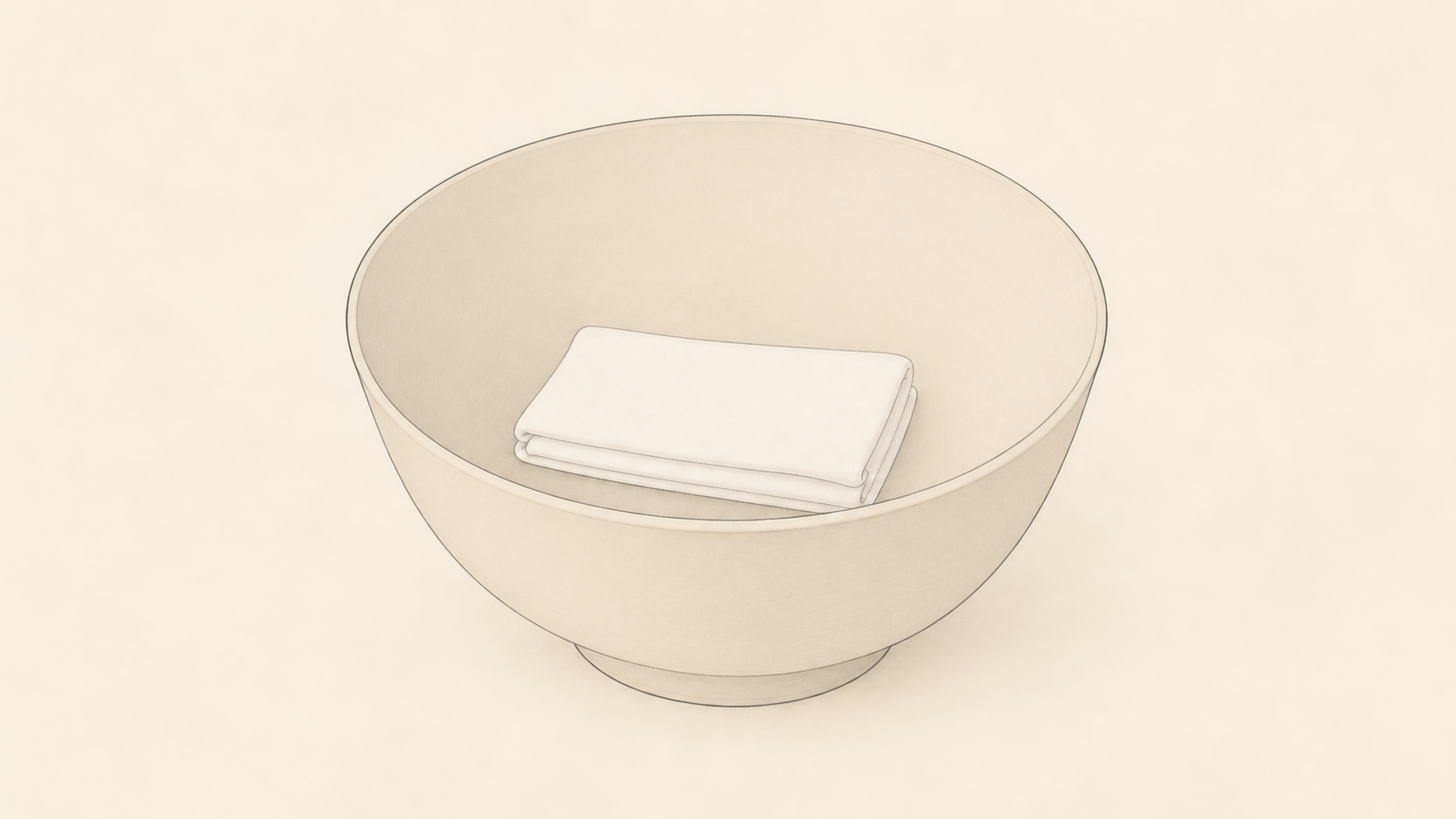
A chakin is the white cloth used to wipe the inside of a tea bowl. It has no pattern or name of its own and seldom draws attention when the implements are examined. Yet the host’s movements can come to a halt if the cloth is folded poorly or is too wet or dry. What work is asked of this one piece of cloth?
The cloth that touches the inside of the tea bowl
The chakin is a cloth for wiping a tea bowl. It is arranged in the bowl before being carried into the room for temae, the procedure for preparing tea. It is used, for example, to wipe the inside after the bowl has been warmed with hot water. Cleanliness comes first because the guest’s lips touch the bowl. Dirt is easy to see on the white cloth, and with no decoration in the way, the folds and hand movements are easy to follow. Dimensions and handling vary by school, but the cloth always comes into contact with the bowl to ready it for another serving.
The chakin is used, washed and checked every time. It is a working implement subject to wear, and its value is judged differently from that of a tea bowl or tea caddy. Cleanliness and good performance take priority over age and rarity. Implements prized for their provenance share the room with implements whose usefulness is maintained through replacement. Choosing and assembling the implements also means judging each piece by what it is there to do.
A fold that remembers what the hand does next
The small cloth is prepared by folding it in a particular way. The folds show where to pick it up, which way to open it and what part to bring against the bowl. The point of the arrangement is to reduce hesitation. Folding the sequence into the cloth before the gathering lets the host handle it without stopping in the middle. The fold gives an otherwise pliable piece of cloth a structure the hand can use.
The chakin is made of soft material. A fold gives it a temporary frame. When spread out it becomes a single soft sheet again, but folded to the right width and thickness it has a clear place for the fingers to catch. Paper and clothing can be folded in similar ways; here the folded form also sets the order in which the work is done. The form is made anew in each preparation, leaving the material soft.
That makes it possible to repeat the movement with a supple cloth.
Getting the cloth just damp enough
The chakin needs some moisture. A completely dry cloth does not settle easily against the curved inside of the bowl. A cloth that is too wet leaves droplets behind. The host wrings, folds and arranges it in the mizuya, the preparation area. Guests may see only a few dozen seconds of work, but someone has already checked how wet the cloth is. Cleanliness at a tea gathering depends on what happens out of sight and on the condition of the materials as well as on the visible act of wiping.
When wringing the cloth in the mizuya, the hand judges its moisture by resistance. Wring hard and the cloth firms up; wring too lightly and it leaves water in the bowl. Weather and the condition of the cloth affect how it dries, so the same number of twists may not work every time. A rule gives the hand a point of comparison. Practice teaches the form of the movement and how to feel small differences in the material.
The cloth should stop dripping when wrung and still settle against the inside of the bowl when opened. The host can check both how damp it feels to the fingertips and how much moisture remains after wiping.
Following a round bowl with a straight-edged cloth
The inside of the tea bowl is curved, while the folded chakin has straight edges and corners. Using its corners and folds in turn, the host guides the cloth over the interior well, the sides and the rim. Gentle pressure brings the pliable cloth into contact with the vessel. Keep the cloth from flopping about or rubbing hard, and touch only the places that need it. The movement also lets the hand feel the shape of the bowl.
Wiping and getting to know the vessel happen in the same motion. Where the folds meet the bowl’s curve, the cloth touches only one area at a time. Fingertips shift the point of contact and turn the cloth to follow the curved surface. The angle of the wrist and the turn of the bowl work together, so a small area of contact can wipe the places that need it. I see a design in which movement brings two different shapes together while each keeps its form.
The pliable cloth and the hand’s adjustments accommodate the different curves of individual bowls.
An unobtrusive tool sets the pace
When the cloth is folded properly and easy to take out, the host’s movements flow. If it is inadequately prepared, there may be small hesitations as the host takes hold again or tries to open it a second time. A quiet pace depends on more than moving slowly. The implements need to be ready for the next action to follow naturally. The chakin shapes the timing of the procedure with little call for attention.
The pace of temae does not depend on a show of speed. If the fold holds when the host takes the cloth out, with few changes of grip and a clear next position, the movement can proceed with fewer pauses. The guest may never notice the individual preparations but can see their effect in the flow of the gestures. Good design behind the scenes lets the people using the space return their attention to what matters.
The chakin is a small example of how that works.
White shows the cloth’s condition
The white of a chakin carries a sense of cleanliness. It first serves a practical purpose: it lets the host see stains or discoloration and decide whether to wash or replace the cloth. A hygienic choice that makes it easier to work can also give the gathering a quiet appearance. There is beauty in seeing the white cloth emerge from the bowl and do its work with its fold still in place.
White is used in advertising and interiors to suggest cleanliness. The white of the chakin first makes it possible to inspect the cloth itself. Dirt shows, and it is easy to distinguish the folds from the outline of the bowl. That visibility gives the cloth its clean appearance. Seen this way, the beauty comes from a choice that makes the cloth easier to check. It shows how the design of chanoyu grows out of the way things are used.
Conclusion: Preparing for the act of cleansing
The chakin is small, unadorned and seldom the focus of a tea gathering. It still has the essential work of touching the inside of the bowl and preparing it for another serving. White cloth, a consistent fold and the right amount of moisture keep the bowl clean and give the host’s hand a clear next move. During temae, follow the chakin from the moment it is taken out until it is put back. In a short span, the cloth follows the curve of the vessel, wipes it and lets the host check it.
The precision of this unobtrusive motion shows how much preparation goes into chanoyu. Look closely at the chakin and the word “cleansing” becomes more concrete. Wiping clears away what is left, gets the bowl ready for the next action and returns attention to the vessel. Once its work is finished, the cloth is folded down again and moves out of view. The way it does its work and then withdraws is part of how it keeps the gathering in order.